
The journal
What happens if you don't rinse rice?
If you skip rinsing, most white rice cooks stickier because surface starch stays on the grains. Rinsing improves texture and removes debris, but it does not make rice safer to eat. Some recipes benefit from not rinsing.
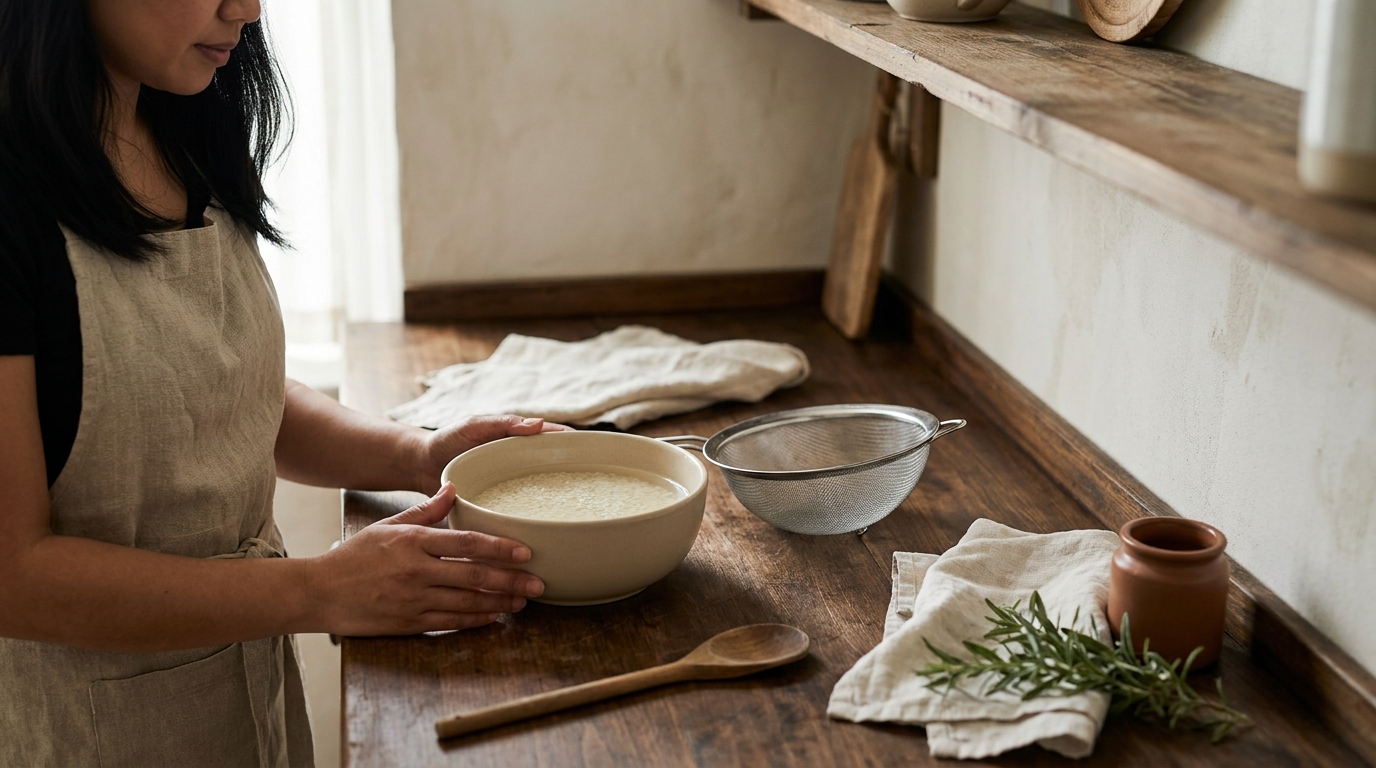
If you don’t rinse rice, the cooked grains are usually stickier and more likely to clump because loose surface starch remains on the outside of the kernels. This effect is strongest with many white rices and less pronounced with brown rice. Rinsing is about texture and debris, not sterilizing; safe cooking and prompt cooling/storage manage food safety risks Bon Appétit, America's Test Kitchen, ScienceAlert.
Texture: what actually changes if you skip rinsing
White rice is milled, which leaves loose starch powders on the grain surface. If you don’t rinse, that surface starch gelatinizes during cooking and helps grains stick together. Rinsing removes much of it and yields fluffier, more separated grains, especially with long-grain varieties America's Test Kitchen, Bon Appétit.
Starch type also matters: amylose-rich rices (like many long-grain types) tend to cook up fluffier, while amylopectin-rich rices (like arborio or glutinous) naturally cook stickier. Rinsing reduces surface starch regardless, but the variety still drives the baseline texture America's Test Kitchen, Bon Appétit.
When skipping the rinse is useful
Some dishes rely on extra starch for body and creaminess. Cooks often minimize or skip thorough rinsing for risotto, congee/porridge, and rice puddings so the released starch can help thicken and bind the dish Bon Appétit, ScienceAlert. If a recipe calls for a creamy or cohesive texture, a light rinse (or none) can be intentional.
Also note that some rice is processed to be "no-rinse" (for example, musen-mai), which already has its sticky outer layer removed during manufacturing. If your bag indicates it’s no-rinse, you don’t need the usual washing step Bon Appétit.
What rinsing does not do: safety and nutrients
Rinsing does not make rice safer to eat by itself. High cooking temperatures address bacteria on the grains; the bigger safety issue is how long rice sits at room temperature after cooking. Spores of Bacillus cereus can survive cooking, so cool and refrigerate rice promptly rather than leaving it out ScienceAlert. For practical cooling guidance, see Do you need to cool leftovers before refrigerating?
Beyond texture, rinsing can remove fine debris and has been reported to reduce some contaminants (such as certain microplastics and some arsenic), but it can also wash away water-soluble nutrients. The extent of these effects varies by rice type and source; rinsing is not a substitute for safe cooking, handling, and varied grain choices ScienceAlert.
How to rinse rice for fluffier grains
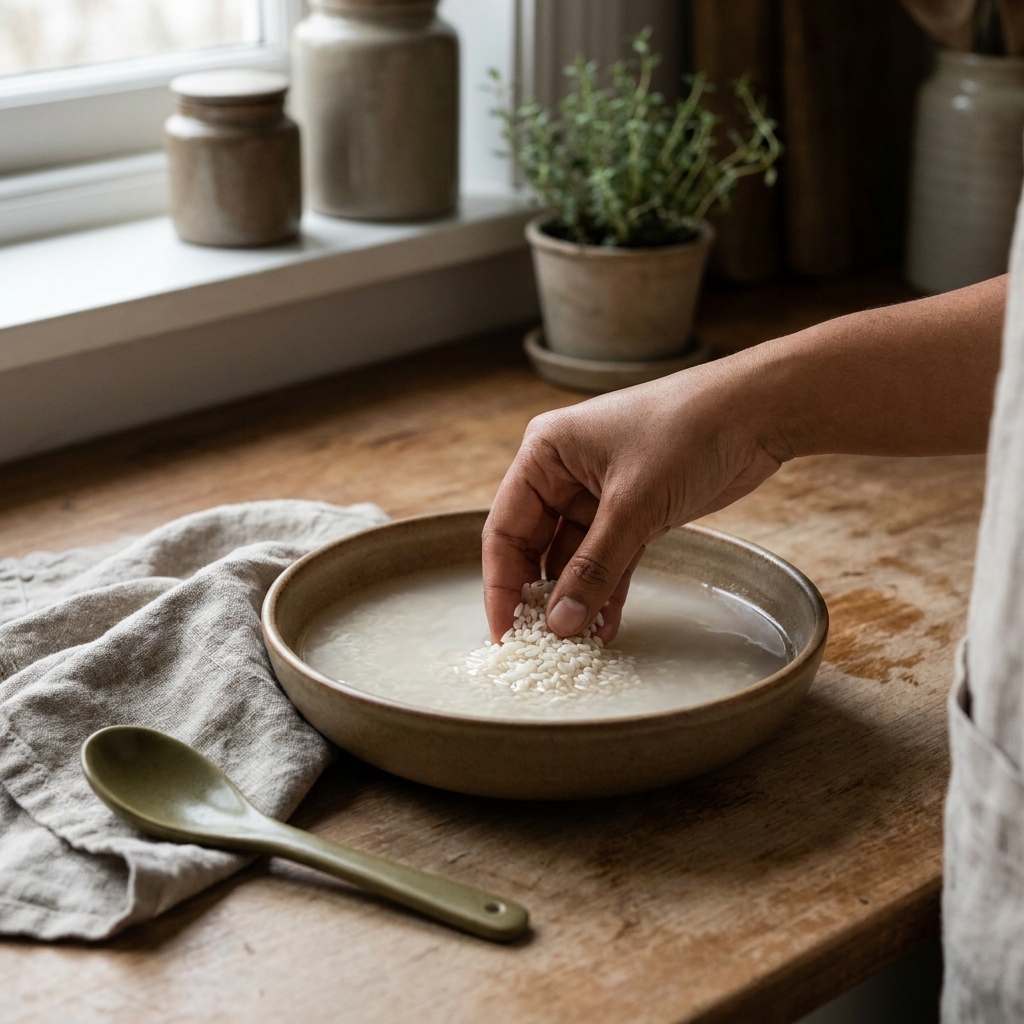
The goal is to remove loose surface starch without soaking so long that grains soften. A simple method: put rice in a bowl, cover with cool water, agitate vigorously, drain, and repeat until the water is nearly clear. A fine-mesh sieve works too. This usually takes just a few minutes America's Test Kitchen, Bon Appétit.
Quick checklist: rinse for fluffy, separate grains
Tip: Practical cues beat fixed counts. The water looking nearly clear is a better signal than, say, three exact rinses America's Test Kitchen.
Troubleshooting common outcomes
- Rice is gummy or clumped: Rinse more thoroughly next time and confirm your water ratio; avoid stirring during steaming. Texture depends on variety too Bon Appétit, America's Test Kitchen.
- Grains too separate when you wanted creaminess: Skip a thorough rinse and use techniques that encourage starch release (stirring and gradual liquid additions for risotto-like dishes) Bon Appétit.
- Label says no-rinse or musen-mai: Follow the package; it’s designed to cook cleanly without washing Bon Appétit.
- Safety questions: Rinsing isn’t a safety control. Cook thoroughly and cool leftovers promptly. For starch-stickiness parallels in another staple, see How Italians stop pasta from sticking.
Bottom line
Don’t rinse if you want creamy, cohesive results; do rinse if you want light, separate grains. Treat cooking, cooling, and storage as your safety steps, and follow any no-rinse instructions on the bag when present.

FAQ
Do I need to rinse brown rice?
Not for texture. Brown rice retains its bran and shows less change from rinsing, though a quick rinse can remove debris America's Test Kitchen, Bon Appétit.
Does rinsing make rice safer?
No. Rinsing doesn’t neutralize pathogens; cook rice properly and refrigerate leftovers quickly to reduce risk from Bacillus cereus ScienceAlert.
How long should rinsing take?
Just a few minutes. Stop when the water is nearly clear; there’s no benefit to counting exact rinses America's Test Kitchen.