
The journal
Can you freeze already grated cheese?
Yes : freezing grated cheese works best for cooked dishes. Learn which cheeses freeze well, how to pack, and how to thaw or use straight from frozen.
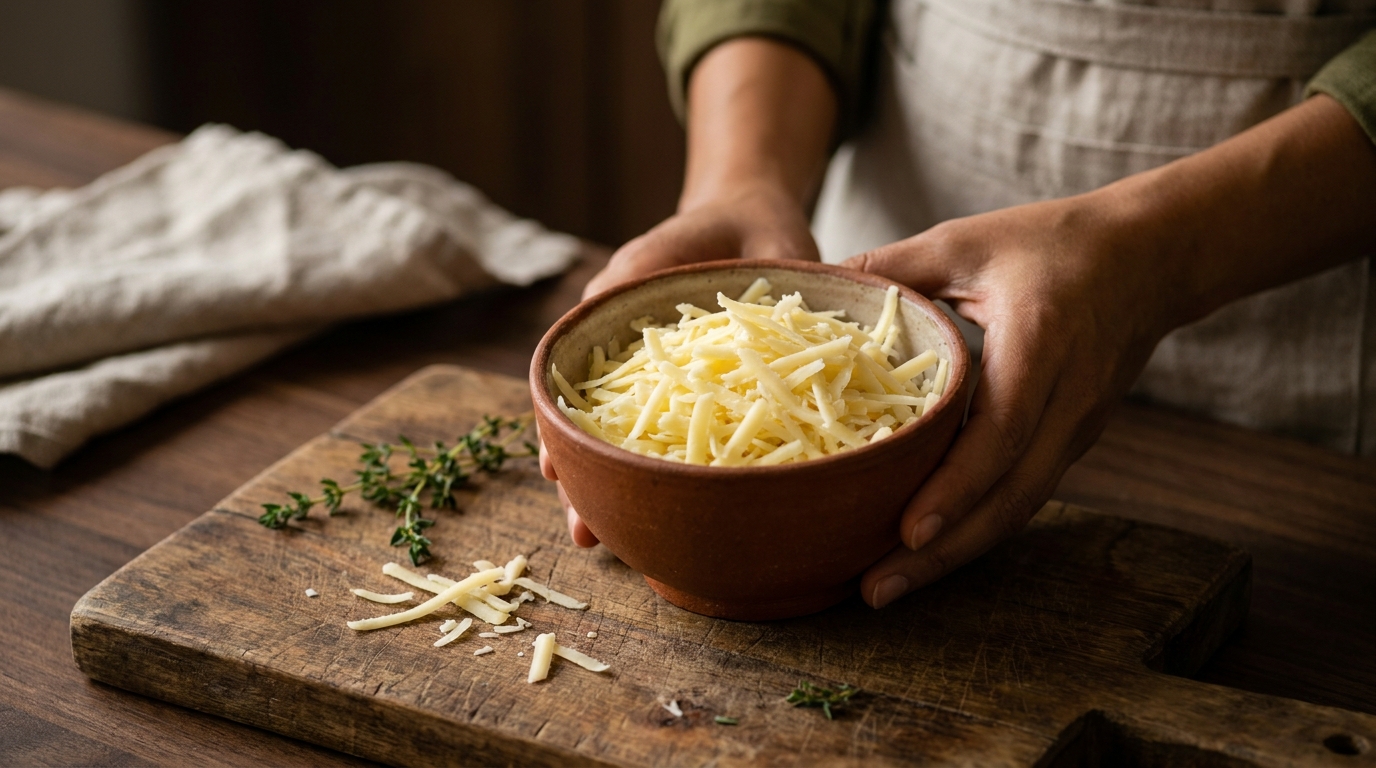
Yes. You can freeze already grated cheese, and it works especially well when the cheese will be melted in hot dishes. Expect a slightly drier, more crumbly texture after freezing and thawing, but flavor and melt for cooking are typically fine for hard and semi-hard cheeses such as cheddar, Swiss, Parmesan, Monterey Jack and low-moisture mozzarella (Running to the Kitchen; Glad freezing and storage guide).
Which grated cheeses freeze well (and which to skip)
Better candidates: grated cheddar, Colby, Swiss, Parmesan, Monterey Jack, provolone and low-moisture mozzarella generally tolerate freezing with minor texture change and still melt well in cooked dishes (Running to the Kitchen; Glad).
Poor candidates: soft and high-moisture cheeses like ricotta, cottage cheese, Brie, Camembert and fresh mozzarella tend to turn watery, grainy or separated after freezing. Only freeze these if you’ll fully cook them later, not for serving cold (Running to the Kitchen).
How to freeze grated cheese so it stays handy
Portion and pack
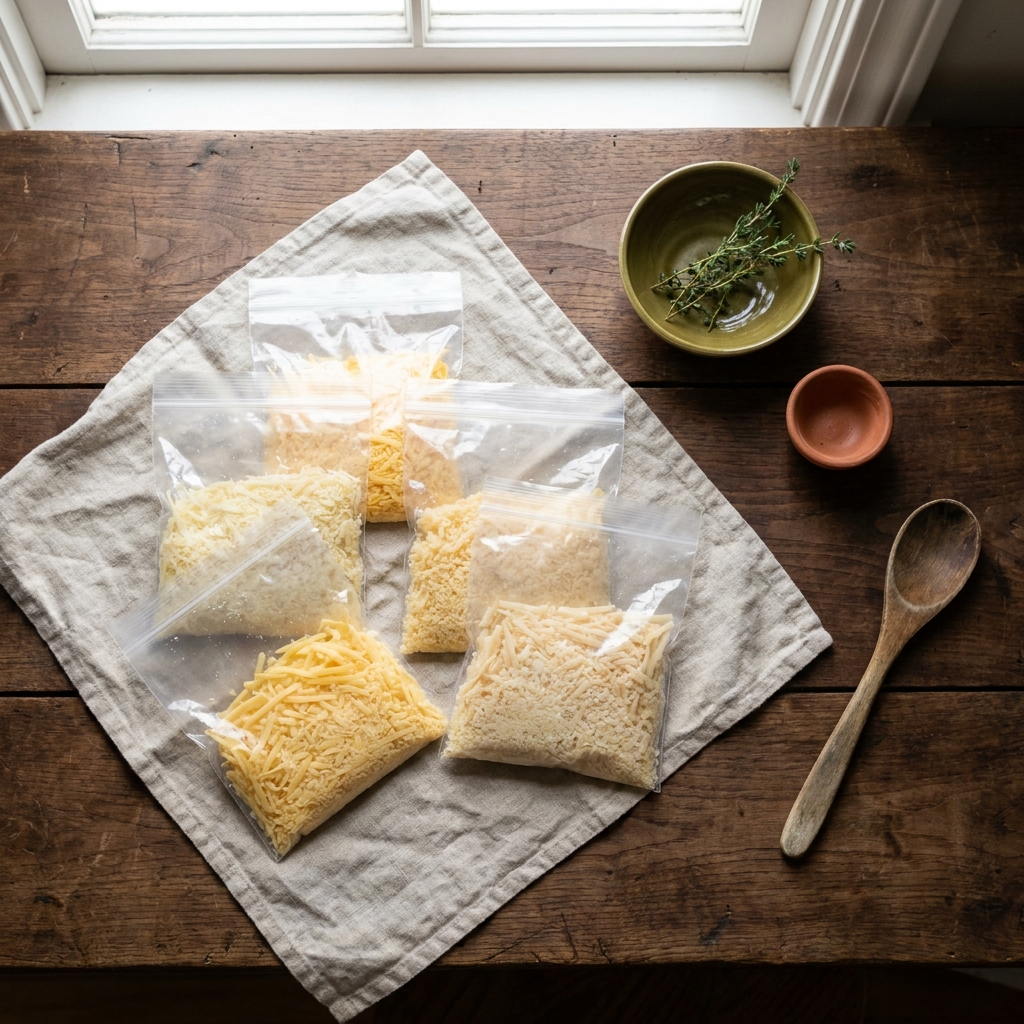
Freeze in recipe-size portions so you only thaw what you need. Pack the grated cheese into freezer-grade bags, press out as much air as possible and lay flat so the bags freeze thin and stack neatly (Running to the Kitchen).
Optional: reduce clumping for cooked uses
Lightly tossing home-grated cheese with a small amount of cornstarch or flour can reduce clumping after freezing. This makes sense only if the cheese will be cooked, not for fresh sprinkling (Running to the Kitchen).
Label and freeze
Label the bag with cheese type and date, then freeze promptly. For quality, plan on using frozen grated cheese within about 2-6 months; many guides suggest 3-6 months for best texture (Running to the Kitchen; Wisconsin cheesemaker guide).
Thawing and using frozen grated cheese
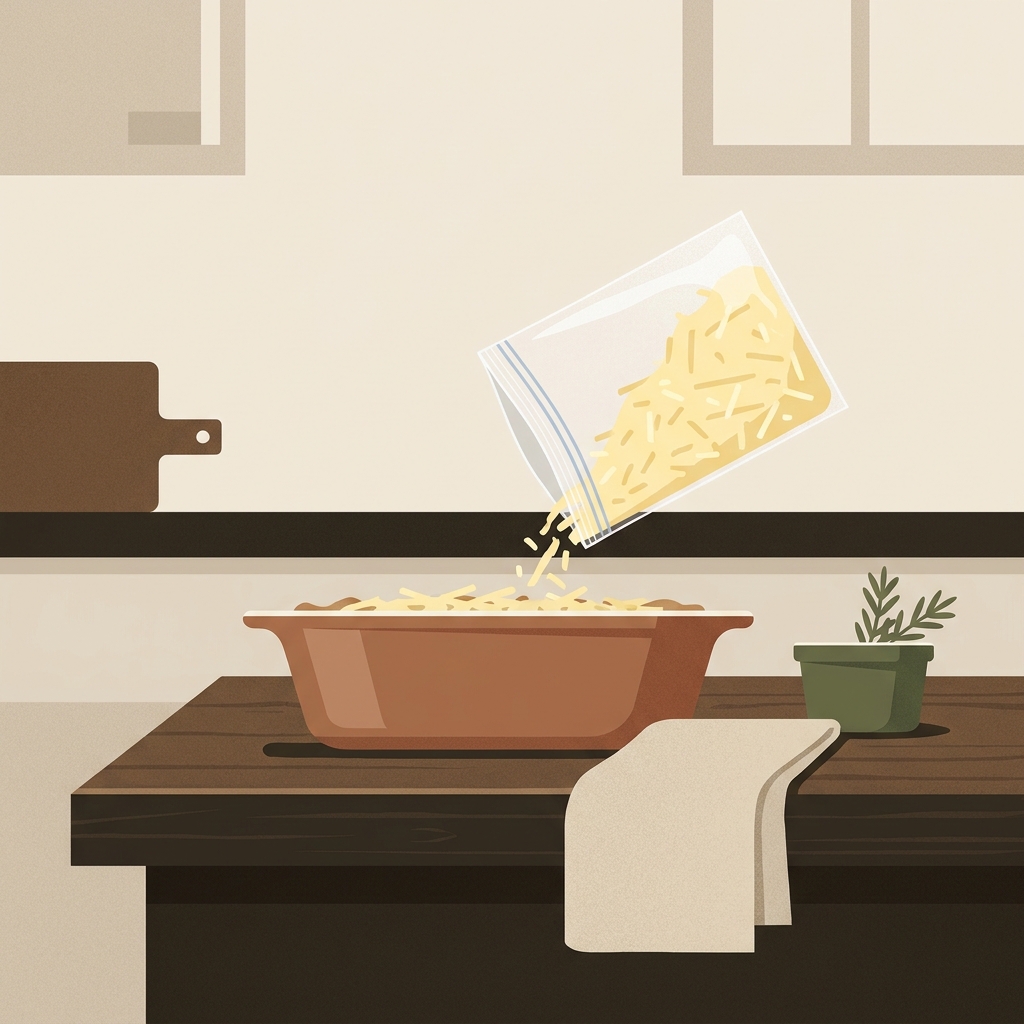
For most hot dishes, use grated cheese straight from the freezer. Add it to pizzas, casseroles, sauces or soups and let the heat do the work (Running to the Kitchen; Wisconsin cheesemaker guide).
If you need loose, sprinkleable shreds for a cold use, thaw the portion slowly in the refrigerator. Large amounts can take up to 24-48 hours to fully rehydrate and loosen. Break up any gentle clumps with clean fingers or a fork (Glad).
Good practices: thaw in the fridge, don’t refreeze once thawed, and only freeze cheese that still looks and smells fresh when you pack it (Running to the Kitchen; Wisconsin cheesemaker guide).
Common mistakes to avoid
- Freezing soft or fresh cheeses for uncooked serving. They often become watery or grainy; reserve them for cooked recipes only if you choose to freeze (Running to the Kitchen).
- Leaving excess air in bags. Air invites freezer burn and more clumping; press out air or use a vacuum sealer if you have one (Running to the Kitchen).
- Freezing one large bag you’ll keep reopening. Portion before freezing to avoid refreezing and quality loss (Running to the Kitchen; Wisconsin cheesemaker guide).
Freeze grated cheese without clumping: quick checklist
Short FAQ
How long does frozen grated cheese keep?
For best quality, use within about 2-6 months; many guides suggest 3-6 months for shredded cheese (Running to the Kitchen; Wisconsin cheesemaker guide).
Can I freeze pre-shredded cheese in its original bag?
Unopened pre-shredded cheese can be frozen in its original packaging. If opened, transfer to an airtight freezer bag and remove air before freezing (Glad).
Does Parmesan freeze well for topping?
Yes. Hard cheeses like Parmesan freeze well; for hot pasta you can add from frozen, or thaw in the fridge and break up clumps for a looser sprinkle (Running to the Kitchen).