
The journal
Is freezer-burned food still safe? What really matters
Freezer burn mainly affects flavor and texture. Learn how prior handling, freezer temperature and safe thawing determine whether food is suitable to use.
Freezer burn alone does not make food unsafe. Food that was properly handled before freezing and then kept at 0°F (-18°C) remains safe, although its quality can decline (FDA: freezer storage). Freezer burn is dehydration and oxidation that harm quality, not safety. But freezer burn does not prove the food was handled safely; if the item thawed at any point, safety depends on that thaw, not the burn itself (Healthline on freezer burn).
What freezer burn is (and what it tells you)
Freezer burn happens when frozen food loses moisture to the air. Ice crystals form and migrate, leaving dry, tough, or discolored spots. Expect surface ice, gray-brown or pale patches on meat, drier textures in fruits and vegetables, and icier, less creamy ice cream. These are quality changes, not signs of bacterial growth if the food stayed fully frozen (Healthline on freezer burn).
Safe to keep, or better to toss?
Keep and use it when
- It was frozen solid the whole time at 0°F (-18°C). In that case, it’s generally safe. Trim away the driest or discolored spots and expect some loss of flavor or tenderness (Healthline on freezer burn).
- You can cook to maximize moisture, like braising or stewing, or use bold sauces to offset dryness (MeatEater: salvage freezer-burned meat).
Be cautious or discard when
- You know or suspect it thawed (for example, after a power outage or a door left ajar). If it wasn’t kept frozen, it may not be safe to consume, depending on how long it thawed and how warm it got. When safety is uncertain, don’t rely on appearance or tasting; it’s safer to discard (Healthline on freezer burn).
- There are strong rancid or other off odors in fatty items like certain meats or fish. That points to oxidation and poor quality; tossing is reasonable for quality even if the item stayed frozen (MeatEater: salvage freezer-burned meat).
Important: Never taste food to decide if it’s safe. Safety depends on time and temperature history, not flavor.
How to use freezer-burned food well
These texture tips apply only after you have checked safe handling and storage. They cannot rescue food made unsafe before freezing. Follow food-specific cooking instructions and temperatures; freezing does not replace safe cooking (FDA: safe food handling).
Meat and poultry: simple salvage steps
- Trim the leathery, gray-brown areas before cooking (Healthline on freezer burn).
- Use one of the FDA’s safe defrosting methods: the refrigerator, cold water, or the microwave. Cook food immediately after cold-water or microwave thawing. Do not thaw perishable food on a counter or in warm water (FDA: safe food handling).
- Braises, stews and other moist dishes can make dry textures easier to use. Choose a suitable recipe and keep any brine or marinade refrigerated (MeatEater: salvage freezer-burned meat).
Quick salvage checklist for freezer-burned meat
Produce, bread, and desserts
- Fruits and vegetables often turn dull, dry, or woody once cooked; repurpose in smoothies, sauces, and soups where texture matters less (Healthline on freezer burn).
- Baked goods may be dry; use for breadcrumbs, croutons, or bread puddings.
- Ice cream loses creaminess and grows ice crystals. Texture suffers. If it has thawed or its storage history is uncertain, do not taste-test it to decide whether to keep it (Healthline on freezer burn).
Prevention that actually works
- Keep the freezer at 0°F (-18°C) or lower and avoid frequent door opening to limit temperature swings (Healthline on freezer burn). Use a thermometer designed for freezer storage (FDA: appliance temperatures).
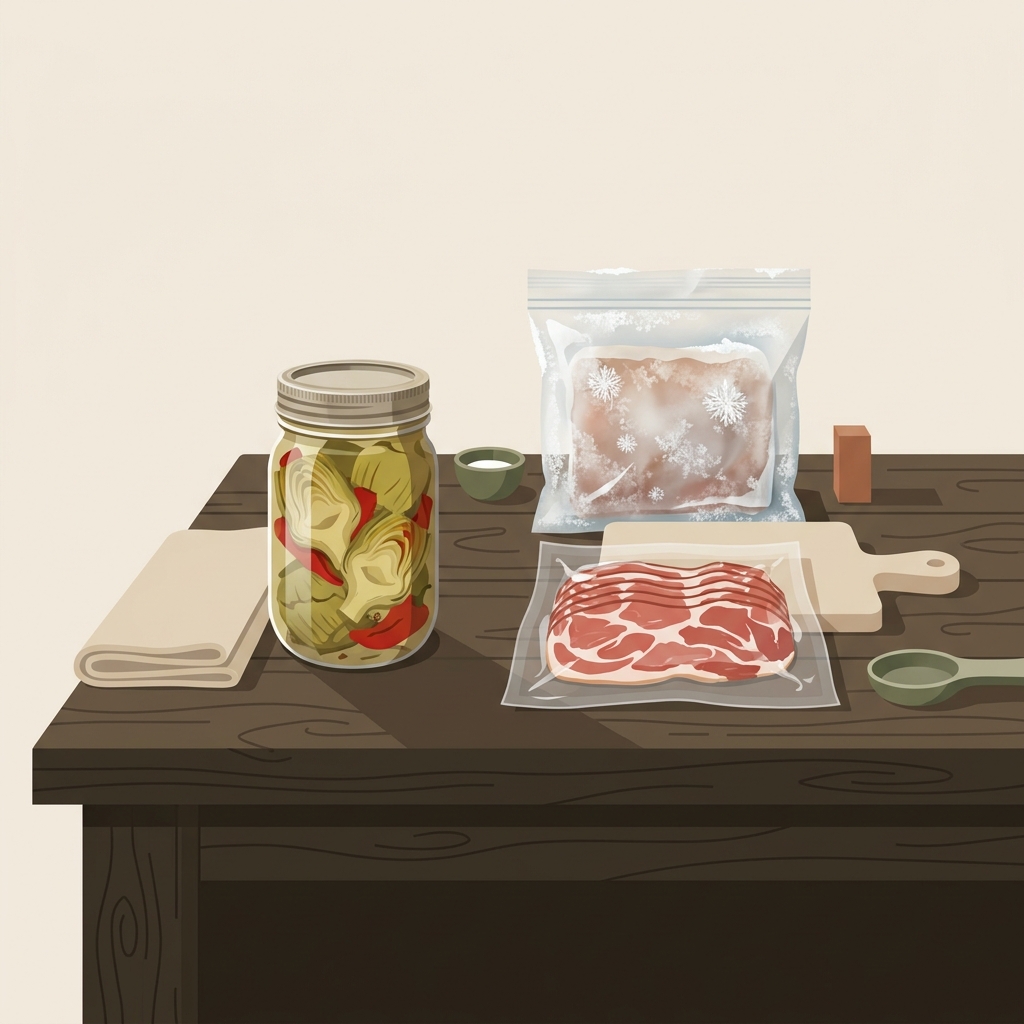
- Package to exclude air: wrap tightly, use freezer-grade bags or containers, press out excess air, or vacuum seal. Label and date so you use older items first (Healthline on freezer burn).
- For bread and baked goods, see our freezer-packaging tips: Should I freeze bread in plastic or foil?
- Divide large amounts of leftovers into shallow containers for quicker cooling in the refrigerator, as the FDA advises. For the cooling step, see Do you need to cool leftovers before refrigerating?
Quick rules to remember
- Freezer burn affects quality, not safety, if the food stayed fully frozen at 0°F (Healthline on freezer burn).
- Freezer burn cannot prove safe handling. If a thaw or power outage occurred, don’t taste to check; when safety is uncertain, discard (Healthline on freezer burn).
- Trim damaged spots and use moist, flavor-forward cooking to make the best of what you have (MeatEater: salvage freezer-burned meat).
FAQ
What if there was a power outage?
If foods partially thawed or warmed during an outage, they may not be safe to eat depending on how long they were thawed and how warm they became. Don’t taste-test; when in doubt about time and temperature, it’s safer to discard (Healthline on freezer burn).
Can I just cut off the freezer-burned parts?
Yes. Trim the dried, discolored areas and cook the remainder. Expect reduced quality compared to fresh or well-preserved frozen food (Healthline on freezer burn).