
The journal
How to tell when a stainless steel pan is ready
A simple water-drop test shows when a stainless steel pan is hot enough to add oil or food, with clear steps, heat adjustments and common mistakes to avoid.
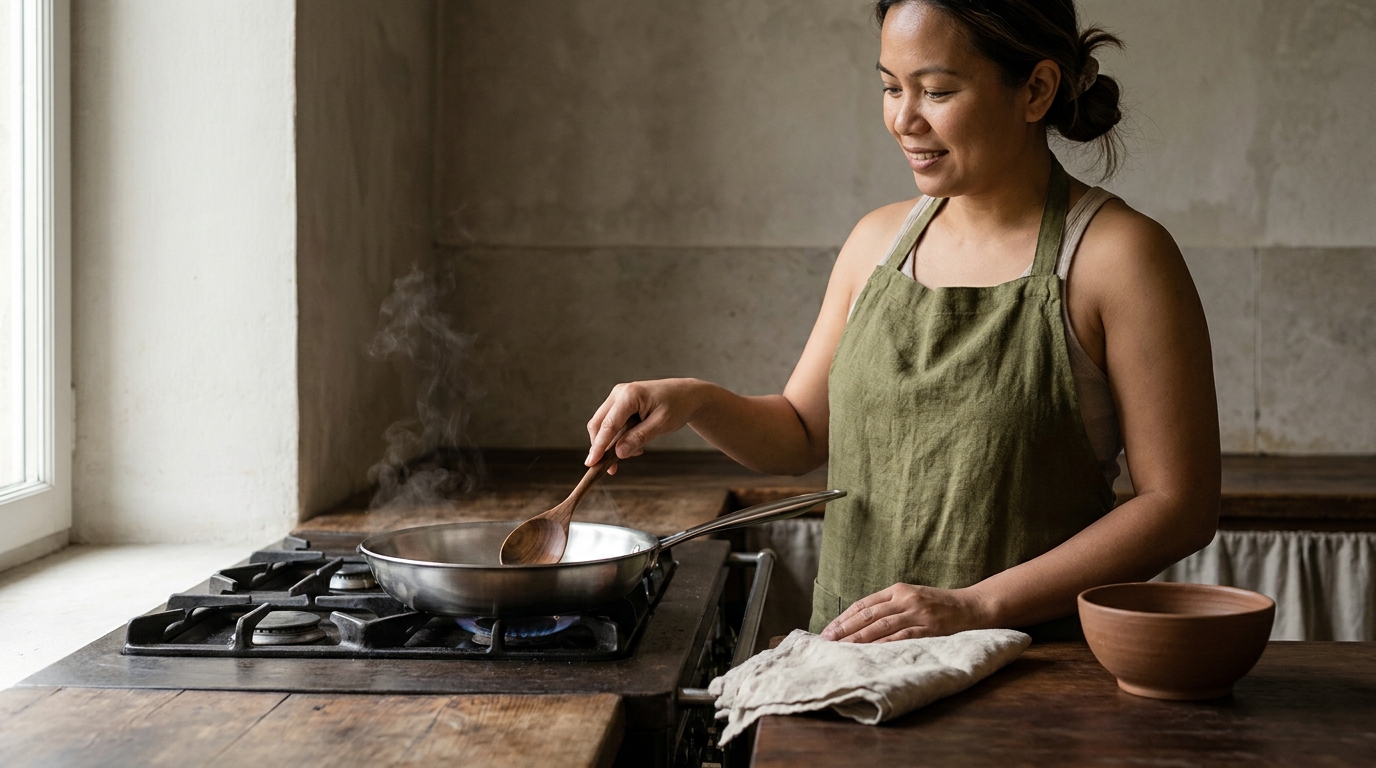
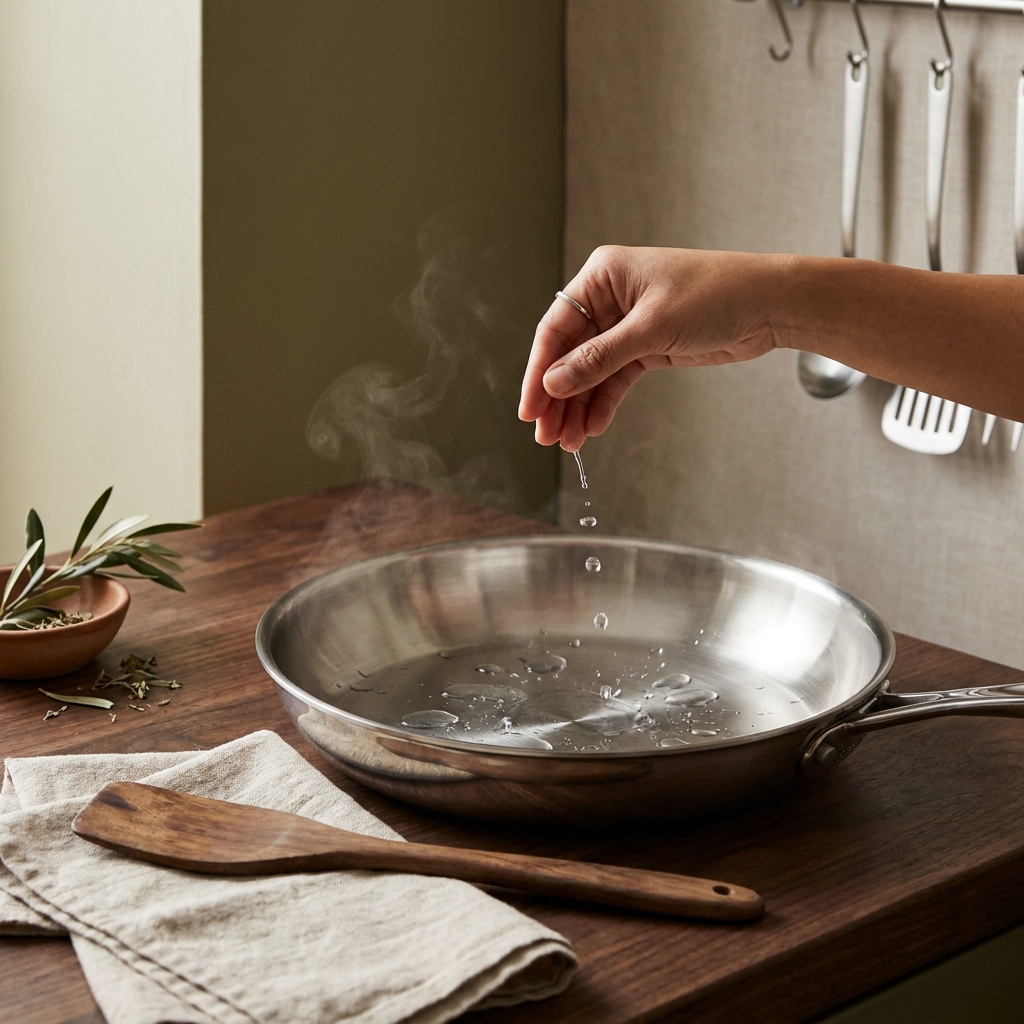
The quickest way to know a stainless steel pan is ready is to preheat it dry over medium heat, then flick on a few drops of water. If the droplets gather into beads and glide or “dance,” the surface is hot enough to add oil or food. If they just sit and evaporate, keep heating; if they splatter violently, turn the heat down and retest (Gastrotools; Cristel USA).
The quick, reliable test
- Start with a dry pan over medium heat and give it a few minutes to warm up (T‑fal).
- Flick 2-3 small drops of water onto the surface and watch what happens:
- Droplets collect into a bead and glide/dance: ready to cook.
- Drops just sit and evaporate quietly: not hot enough; keep heating.
- Drops splatter explosively: a bit too hot; lower the heat and let it settle, then retest (Gastrotools; Cristel USA).
Once the pan passes the bead test, you’re set up for food to brown faster and release more easily when cooked with fat (T‑fal).
When to add oil and when to add food
After the pan is hot enough, turn the burner down slightly, then add your cooking fat and swirl to coat. Use a fat that suits your heat level; higher smoke point oils are better for hot searing, while butter works for lower to medium heat. Then add the food (T‑fal).
- For searing: Pat protein dry, avoid overcrowding, and let it release on its own before flipping to keep the crust intact (T‑fal).
- For delicate foods (eggs, some vegetables): Add fat before the food and keep heat moderate so they cook through without scorching (Cristel USA).
Step-by-step guide you can repeat
- Preheat a dry stainless steel pan over medium for a few minutes (T‑fal).
- Do the water-drop test. Beads that roll = ready; quiet evaporation = wait; wild spatter = cool it slightly and retest (Gastrotools).
- Lower the heat a touch, add oil or butter, heat it briefly, then add food (T‑fal).
- Let food sear until it naturally releases before turning; don’t crowd the pan (T‑fal).
Check your pan readiness in under 60 seconds
Common mistakes to avoid
- Adding oil or food before the pan is hot: leads to sticking. Do the quick water test first (Gastrotools).
- Keeping the heat too high the whole time: stainless retains heat; once hot, turn it down a bit to prevent burning (T‑fal).
- Overcrowding the pan: drops the temperature and hurts browning; cook in batches when needed (T‑fal).
FAQs
What should the water look like when the pan is ready?
Small drops that merge into a bead and glide or “dance” across the surface indicate the right temperature to start cooking (Gastrotools; Cristel USA).
Do I keep the heat high after the test?
No. Once the pan is hot, lower the heat slightly before adding fat and food. Stainless pans hold heat well, so this helps prevent scorching and sticking (T‑fal).
How long should preheating take?
Expect a few minutes, but stoves and pans vary. Heat gradually, test, and adjust as needed (T‑fal; Gastrotools).
More ways to build heat control skills
- Warm milk with honey, without scorching
- How long to toast nuts in the oven? Practical times and method