A gentle, step-up method: soak, simmer with baking soda, scrub with a nonabrasive pad, then use an oxalic acid cleaner for stubborn residues and heat stains.
By Stirred Daily editorial team ·
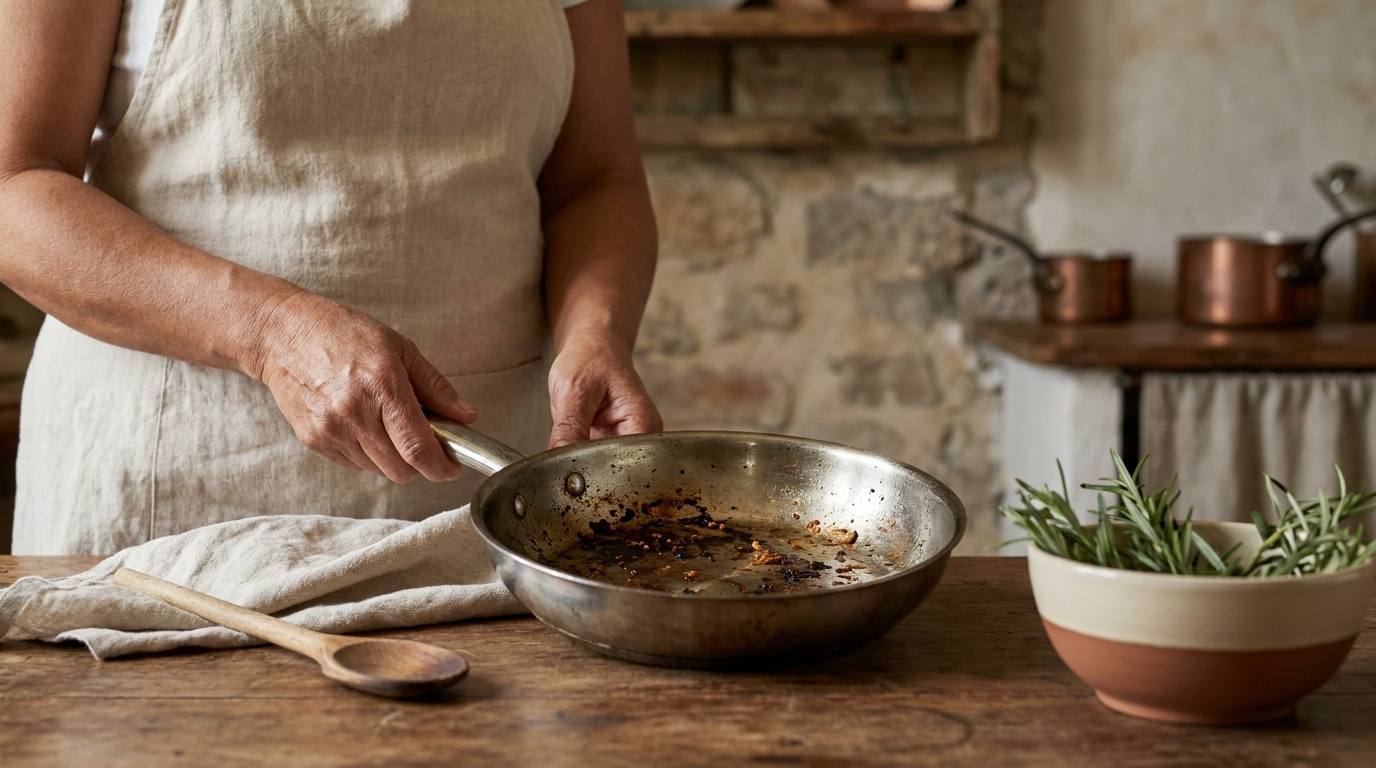
To remove food stuck on a stainless steel pan, start with a warm, soapy soak. If residue remains, simmer water with baking soda for 10 to 15 minutes, let the pan cool, and scrub gently with a nonabrasive pad. For stubborn brown, sticky buildup or rainbow heat discoloration, use an oxalic acid-based cleaner as directed, then rinse well (Dalstrong; America’s Test Kitchen).
Step-by-step method (start gentle, escalate only if needed)
Soak first: Fill the cooled pan with warm water and a little dish soap. Let it sit to soften loose bits, then scrape with a plastic or wooden scraper.
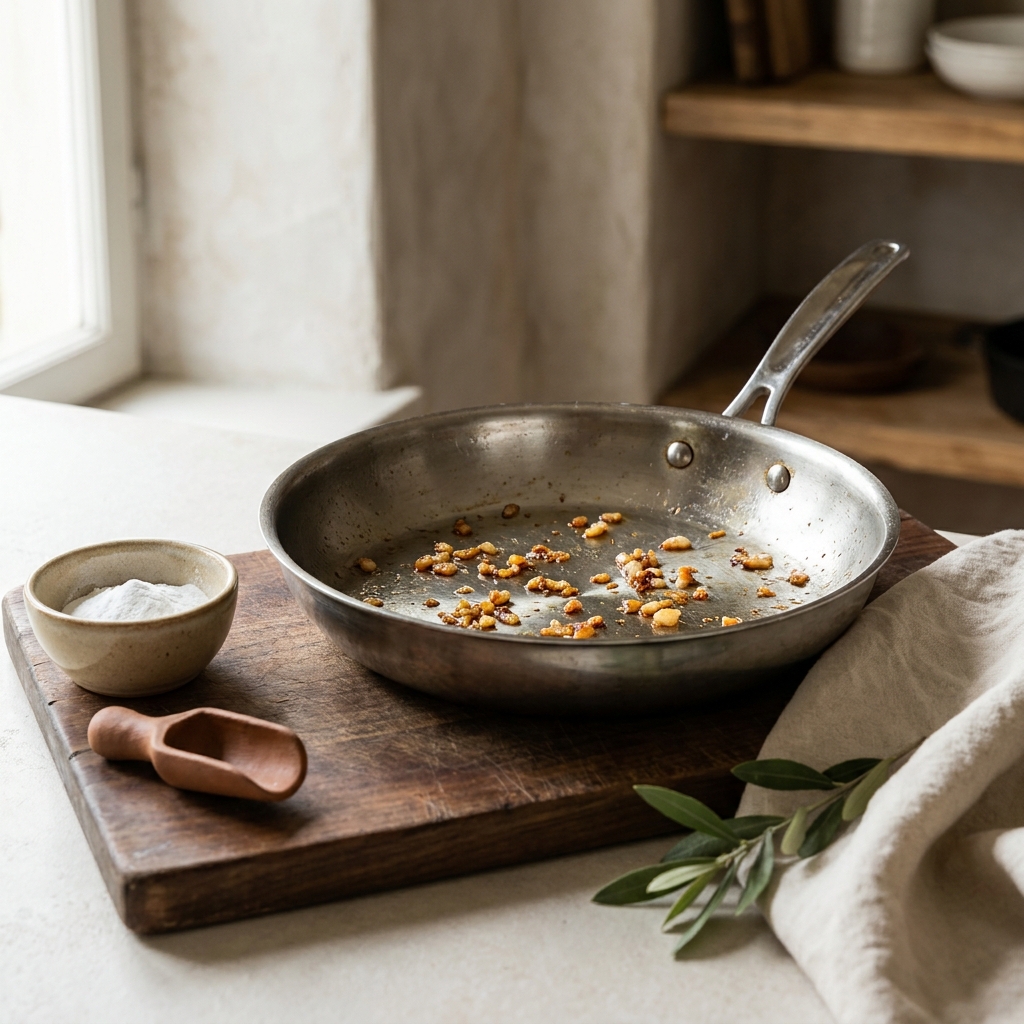
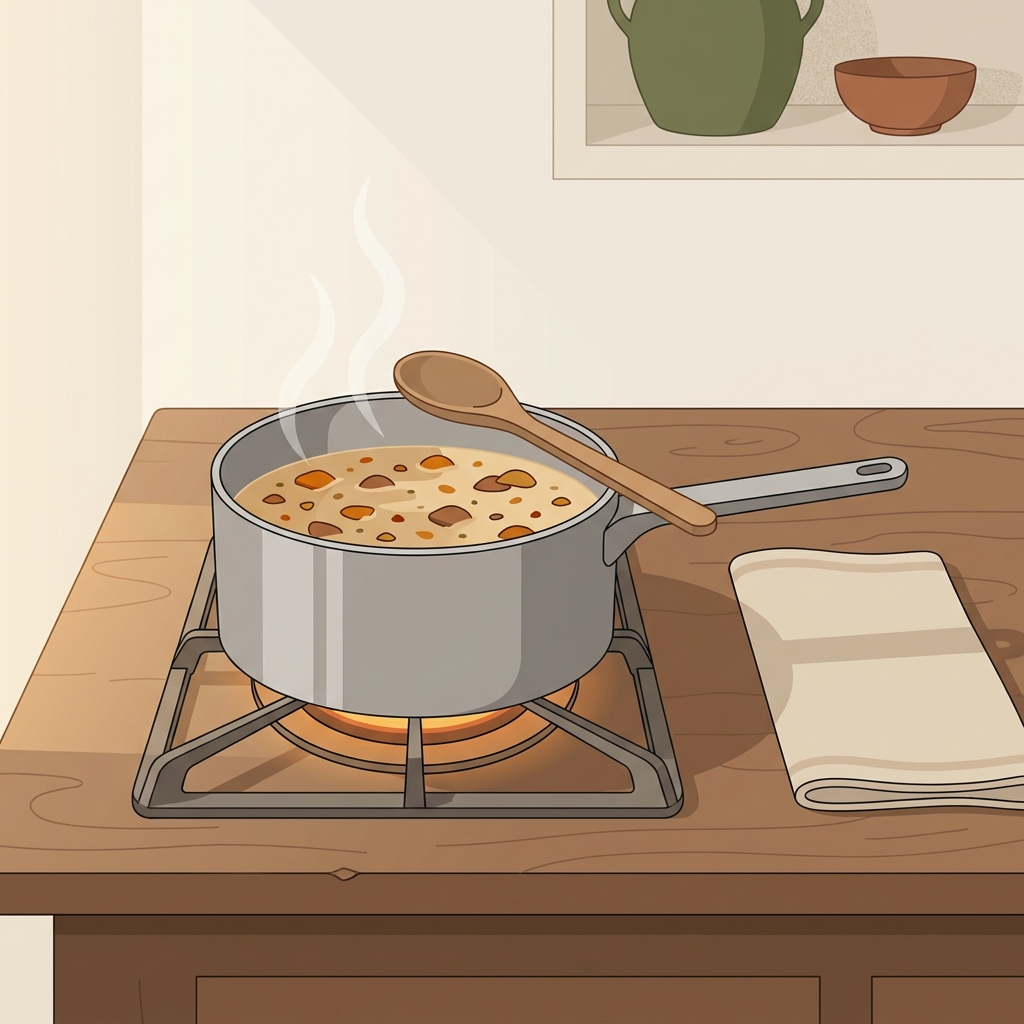
Baking-soda simmer: Add fresh water to cover the stuck area and stir in a few tablespoons of baking soda. Bring to a low boil/simmer for 10-15 minutes, cool, then gently scrub with a nonabrasive pad (Dalstrong).
Rinse and reassess: Rinse well. If small patches remain, repeat the simmer and light scrub rather than jumping to harsh abrasives.
Use an oxalic acid cleaner for tough residue or discoloration: Wet the pan, apply the oxalic acid cleaner as directed, and rub gently with a soft sponge. This combination of acid and a mild abrasive targets sticky, polymerized oil and rainbow heat stains (America’s Test Kitchen).
Match the method to the mess
Brown, sticky film after high-heat cooking: This is often overheated oil breaking down into stubborn residues that soap struggles to lift. An oxalic acid cleaner can chemically break that layer, while a gentle abrasive helps lift it (America’s Test Kitchen).
Rainbow or dark heat discoloration: Oxalic acid-based cleaners are effective on this type of stainless-steel discoloration (America’s Test Kitchen).
Light stuck bits and fond: Soak and a baking-soda simmer are usually enough (Dalstrong).
Common mistakes to avoid
Skipping the soak and going straight to harsh abrasives. Start with the least aggressive steps so you don’t dull the finish.
Overheating oil. Very hot oil can break down into a sticky layer that clings to the pan; keep heat moderate to reduce polymerized residue (America’s Test Kitchen).
Mixing cleaners. Don’t combine products; rinse well between products and follow the label for any chemical cleaner.
Prevention that actually helps
Use moderate heat and enough oil for the food. Avoid letting oil smoke; that’s when sticky residues form (America’s Test Kitchen).
After searing, add a splash of water to loosen fond while the pan is still warm, then wash. Prompt cleaning reduces baked-on deposits.
Dry thoroughly after washing to keep the surface spotless.
De-stick a stainless pan: quick checklist
Can I use vinegar?
For some burnt-on films, soaking in a water-and-white-vinegar mixture can help before a gentle scrub (Dalstrong). Always rinse thoroughly and avoid mixing acids with other cleaners.
Is an oxalic acid cleaner safe for my pan?
Used as directed on stainless steel, oxalic acid-based cleaners effectively remove sticky residue and heat discoloration. Wet the surface, apply the cleaner, rub gently, and rinse well (America’s Test Kitchen).
When should I stop?
If you notice pitting, warping, or a roughened surface while cleaning, stop and contact the cookware maker before escalating with abrasives.