
The journal
Which herbs should not be refrigerated (and how to keep the rest fresh)
Basil is the main herb to keep out of the fridge. Learn an easy countertop method for basil, smart fridge setups for other herbs, and when to freeze.

Basil is the one common fresh herb you should keep out of the refrigerator. Cold temperatures often blacken its leaves and mute the aroma, while most other herbs do well in the fridge if you manage moisture and airflow (Escoffier).
Keep basil fresh at room temperature
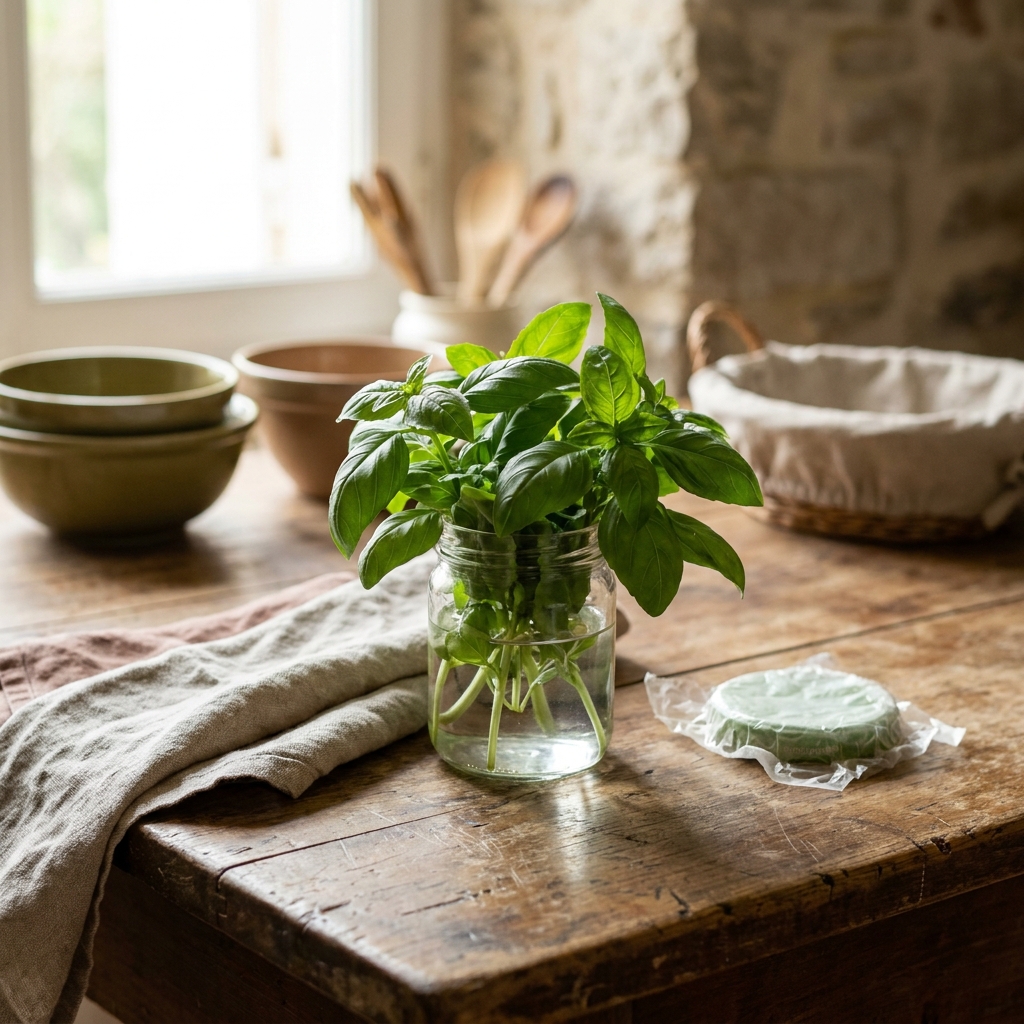
Use the bouquet method: trim the stems, stand the bunch in 1 to 2 inches of room-temperature water, and keep it on the counter. Change the water every few days. In very dry kitchens, a loose cover over the leaves can help; in humid kitchens, leaving them uncovered often works better (Escoffier). Some growers also recommend keeping basil uncovered on the counter rather than in the fridge (Jacobs Farm / del Cabo).
Countertop basil: quick daily upkeep
What to refrigerate (and how)
Delicate herbs that like gentle hydration
Most soft, delicate herbs such as cilantro, parsley, dill, chives, and mint hold up best in the refrigerator with a little moisture and some airflow. Two practical options:
- Paper-towel method: Wrap herbs in a lightly damp (well-wrung) paper towel and place them in a loose bag or container, then refrigerate (Escoffier).
- Bouquet-in-fridge: Trim stems and stand the bunch in a little water; cover loosely if your fridge is very dry (Escoffier).
Hardy, woody herbs that prefer drier conditions
Woody herbs like rosemary, thyme, oregano, and sage generally prefer lower humidity and airflow. Arrange sprigs in a single layer on a slightly damp paper towel, roll loosely, and refrigerate in a bag or wrap with room for air (Jacobs Farm / del Cabo; Escoffier).
Why basil dislikes the cold
Refrigeration slows microbes but can cause cold damage to basil, leading to blackened leaves and dull flavor. That’s why countertop storage keeps basil looking and tasting better, even though the fridge works well for most other herbs (Escoffier).
Need herbs to last longer? Freeze them
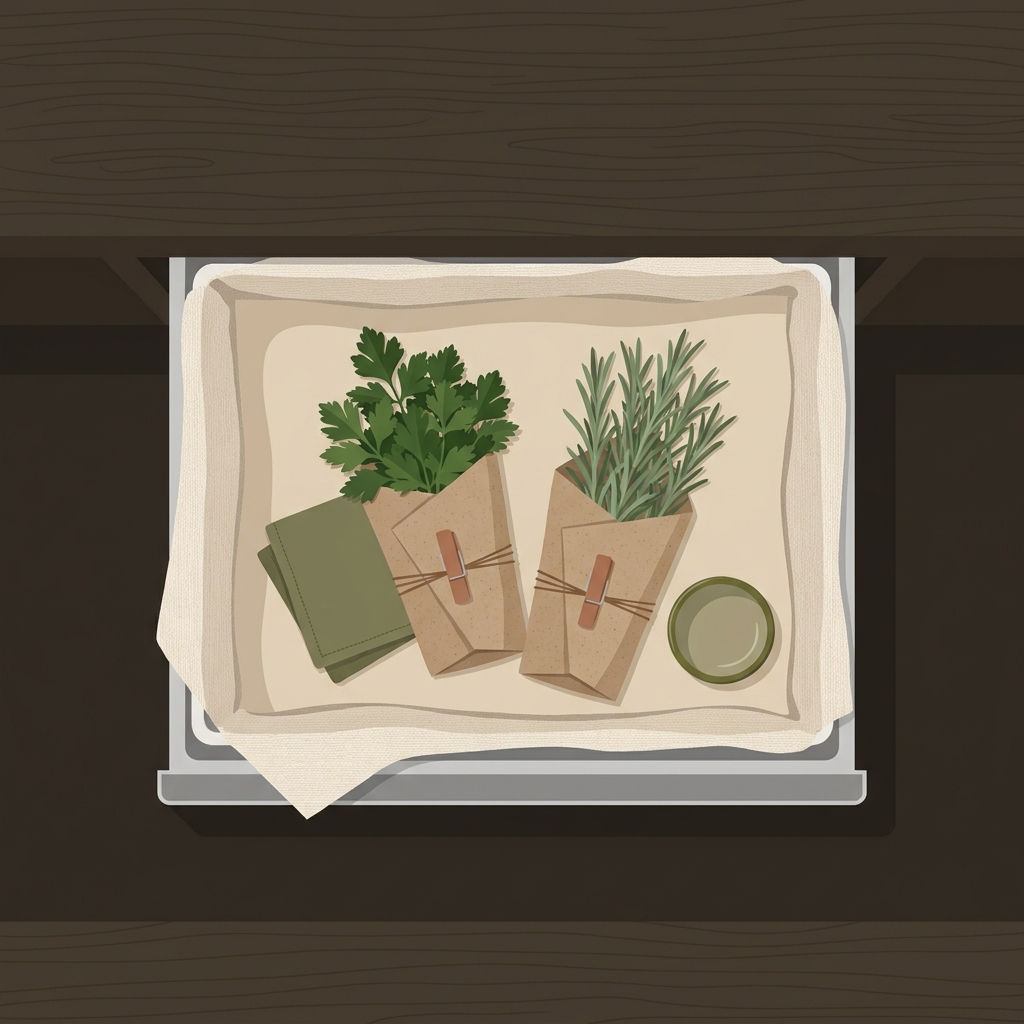
- Ice-cube method for delicate herbs: Chop basil, parsley, cilantro, dill, or chives; pack into ice-cube trays and cover with water or oil, then freeze. Add cubes straight to hot dishes (Escoffier).
- Flash-freeze hardy herbs: Freeze rosemary, thyme, sage, oregano, or bay on a tray in a single layer, then bag. Remove a sprig or leaf as needed (Escoffier).
- Pesto and herb butter: Blend soft herbs into pesto or mix into softened butter, portion, and freeze for quick finishing flavor (Escoffier).
Common mistakes to avoid
- Refrigerating basil. Keep it at room temperature in water instead (Escoffier).
- Storing herbs soaking wet. Excess surface moisture speeds sliminess and decay (Escoffier).
- Sealing herbs airtight without airflow. Especially for hardy herbs, allow a bit of air to prevent trapped humidity (Escoffier).
- Overpacking containers so leaves get crushed. Gentle handling prevents bruising (Jacobs Farm / del Cabo).

Frequently asked questions
Is basil ever OK in the fridge?
It usually darkens quickly in cold air, so room temperature in water is the better choice for color and aroma (Escoffier).
Should I wash herbs before storing them?
Extra moisture shortens shelf life. Gently shake off visible dirt and wash only what you plan to use right away; store the rest as dry as possible (Escoffier).
Related reads: