
The journal
How to measure flour correctly
The most reliable way is to weigh flour in grams. If you use cups, use the spoon-and-level method and avoid packing the flour.
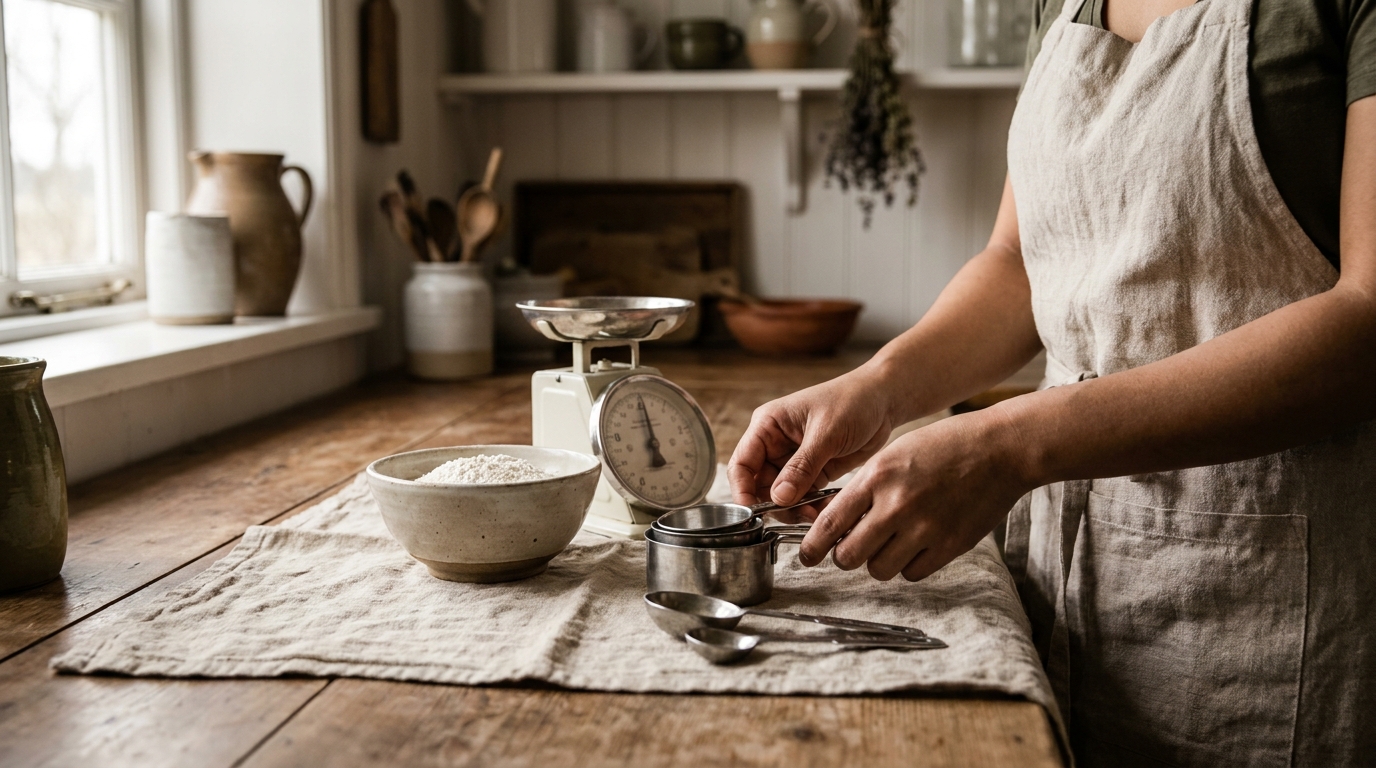
The correct way to measure flour is to weigh it on a digital kitchen scale in grams. If you do not have a scale, use the spoon-and-level method with dry measuring cups so you do not pack extra flour into the cup (https://www.kingarthurbaking.com/videos/baking-skills/how-to-measure-flour).
Why accuracy matters
Flour measurement is a major swing factor in texture. Too much flour makes cookies dense and cakes dry; too little can make batters loose. Weighing removes these variables. If using cups, spoon-and-level reduces compaction compared with scooping directly from the bag (https://www.kingarthurbaking.com/blog/2015/04/28/weighing-ingredients) (https://www.tasteofhome.com/article/how-to-measure-flour-the-right-way/).
Method A: Weigh flour in grams (most accurate)
Step-by-step
- Put a bowl on your digital scale and press tare to zero.
- Spoon flour into the bowl until you reach the recipe’s gram amount.
- If measuring more ingredients into the same bowl, press tare between additions.
Using a scale improves consistency, saves cleanup, and avoids guesswork from packed or fluffy flour (https://www.kingarthurbaking.com/blog/2015/04/28/weighing-ingredients).
Weigh flour with confidence
Note: A cup of all-purpose flour can be listed as about 120 grams or 125 grams depending on the source. If your recipe provides weights, always follow those numbers (https://www.kingarthurbaking.com/videos/baking-skills/how-to-measure-flour) (https://www.tasteofhome.com/article/how-to-measure-flour-the-right-way/).
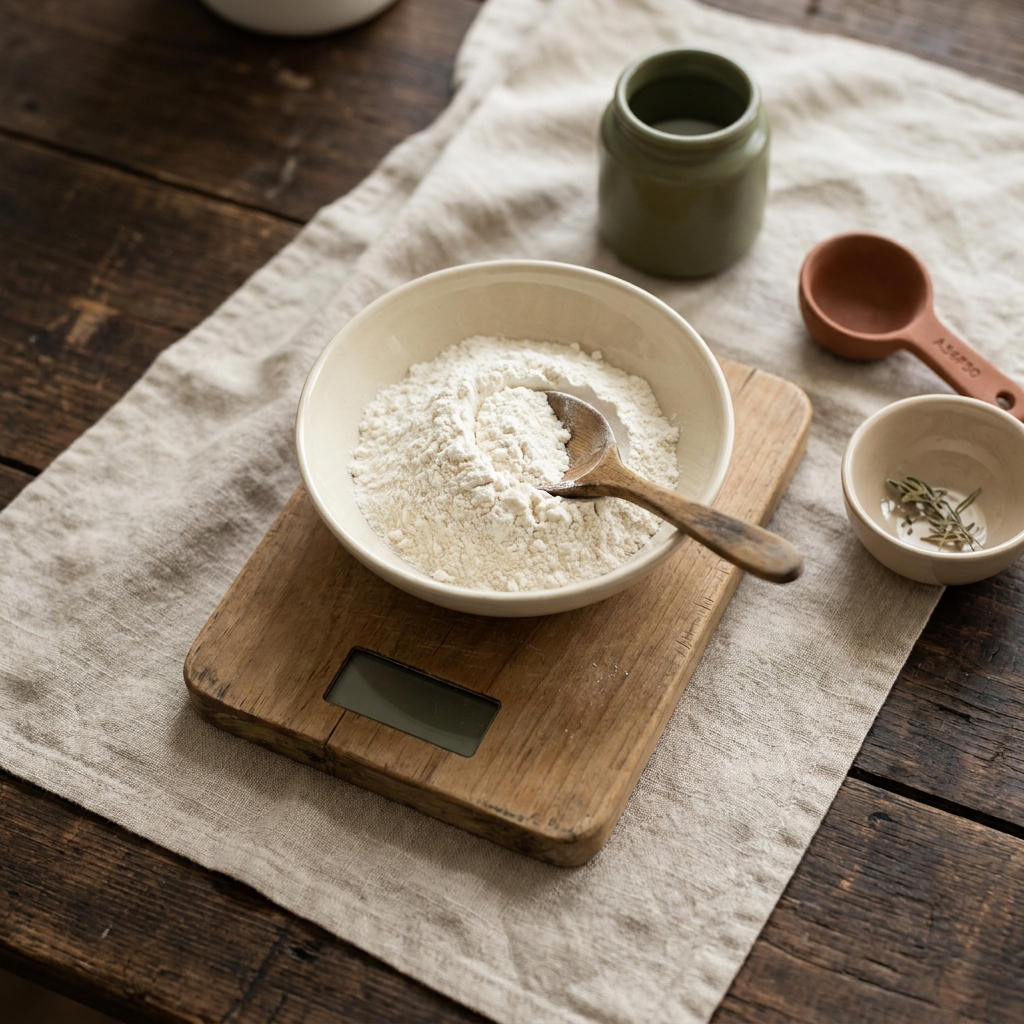
Method B: Measure by volume using spoon-and-level
Use this when a recipe gives cups only
- Fluff the flour in its container to loosen it.
- Use a spoon to fill a dry measuring cup until heaping. Do not scoop with the cup.
- Level the top with a straight edge. Do not tap or pack the flour.
This “fluff, spoon, level” technique keeps you close to the intended amount and avoids compacting flour, which adds unintended weight (https://www.kingarthurbaking.com/videos/baking-skills/how-to-measure-flour) (https://sallysbakingaddiction.com/how-to-measure-baking-ingredients/) (https://www.tasteofhome.com/article/how-to-measure-flour-the-right-way/).
Use dry measuring cups for flour, not a liquid measuring jug, for best accuracy (https://www.tasteofhome.com/article/how-to-measure-flour-the-right-way/).
Read the recipe wording carefully
“Sifted” placement changes the order
- “1 cup sifted flour” means sift first, then measure.
- “1 cup flour, sifted” means measure first, then sift.
Follow the recipe’s exact wording to keep amounts consistent (https://sallysbakingaddiction.com/how-to-measure-baking-ingredients/).
If your recipe includes grams, use them. Cup-to-gram conventions vary by publisher, which is why weights are preferred (https://www.kingarthurbaking.com/videos/baking-skills/how-to-measure-flour) (https://www.kingarthurbaking.com/blog/2015/04/28/weighing-ingredients).
Related reading: How do I use an oven thermometer when baking? and Why fold instead of stir? A practical guide for lighter bakes.
Common mistakes and quick fixes
What to avoid
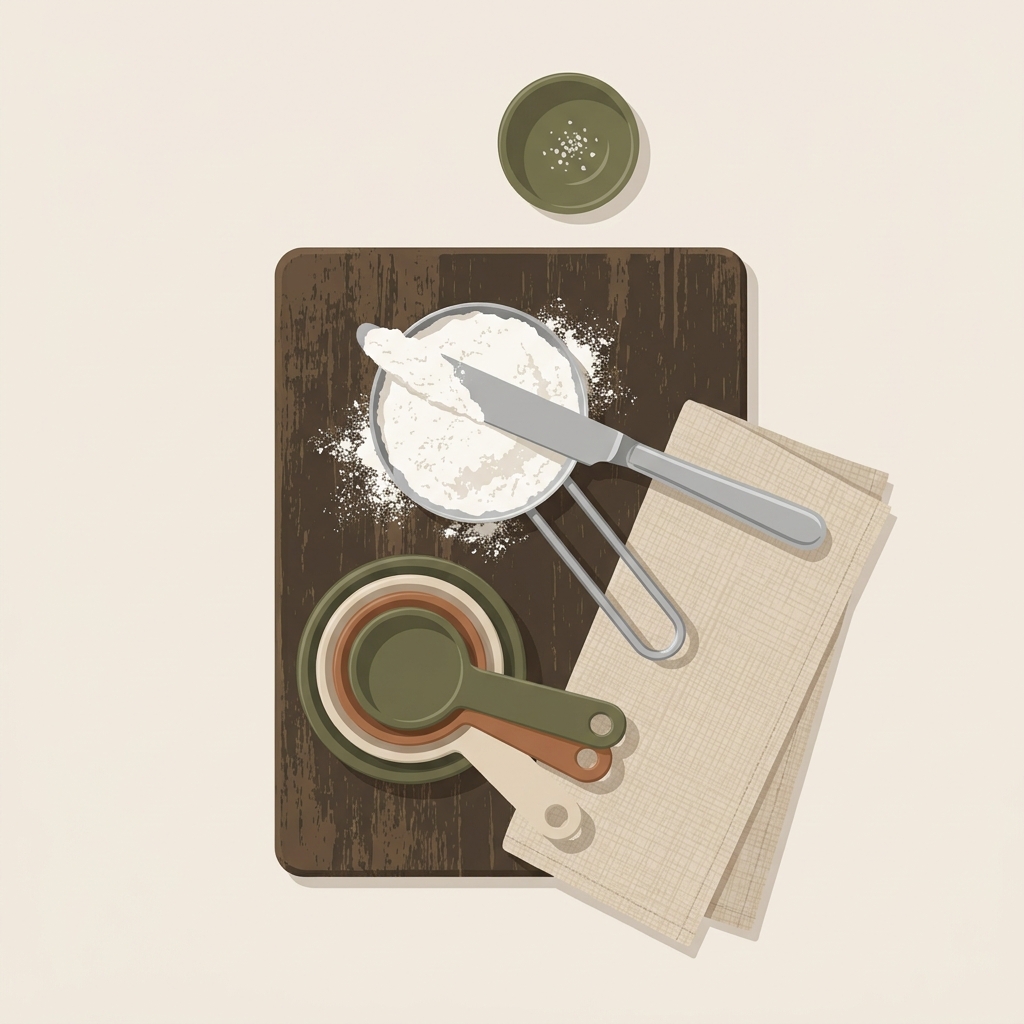
- Scooping the measuring cup directly into the bag or canister (packs extra flour).
- Tapping the cup to settle flour before leveling.
- Packing flour down in the cup.
All three can add significant extra flour and change results (https://sallysbakingaddiction.com/how-to-measure-baking-ingredients/) (https://www.tasteofhome.com/article/how-to-measure-flour-the-right-way/).
If your batter or dough looks too dry
- Pause and recheck your measurements before adding more ingredients.
- Let the mixture rest briefly to hydrate; then adjust slowly, adding liquid a tablespoon at a time until the texture matches the recipe description.
Checklist: before you measure flour
FAQs
Do I need to sift flour before measuring?
No, unless your recipe specifically tells you to sift at a certain step. Sifting at the wrong time changes the amount you add (https://sallysbakingaddiction.com/how-to-measure-baking-ingredients/) (https://www.tasteofhome.com/article/how-to-measure-flour-the-right-way/).
Can I measure straight into the mixing bowl?
Yes when using a scale: place the bowl on the scale, tare to zero, and add flour to the target grams. This is faster and more consistent than using cups (https://www.kingarthurbaking.com/blog/2015/04/28/weighing-ingredients).
Does a cup of flour always weigh the same?
No. Different sources standardize a cup of all-purpose flour at about 120 to 125 grams, and other flour types vary. Use the recipe’s given weights when provided (https://www.kingarthurbaking.com/videos/baking-skills/how-to-measure-flour) (https://www.tasteofhome.com/article/how-to-measure-flour-the-right-way/).

Related guides
Related guide from Ground & Gauge
If the scale itself needs checking before you measure, see How do I recalibrate my scale?.
Product options for this topic
As an Amazon Associate I earn from qualifying purchases. These are researched options, not hands-on test results. Check the exact size or model, current price and availability on Amazon.
| Product option | Fit and limits to check | Retailer |
|---|---|---|
| OXO Good Grips 11-pound kitchen scale | A kitchen-scale candidate for weighing flour and water. Check minimum increments and capacity; very small yeast quantities may need a finer scale. | View on Amazon |