
The journal
How do I use an oven thermometer when baking? Practical guide for home bakers
Learn how to use a kitchen thermometer when baking to improve oven temperature accuracy and internal temperature baking for more consistent results.
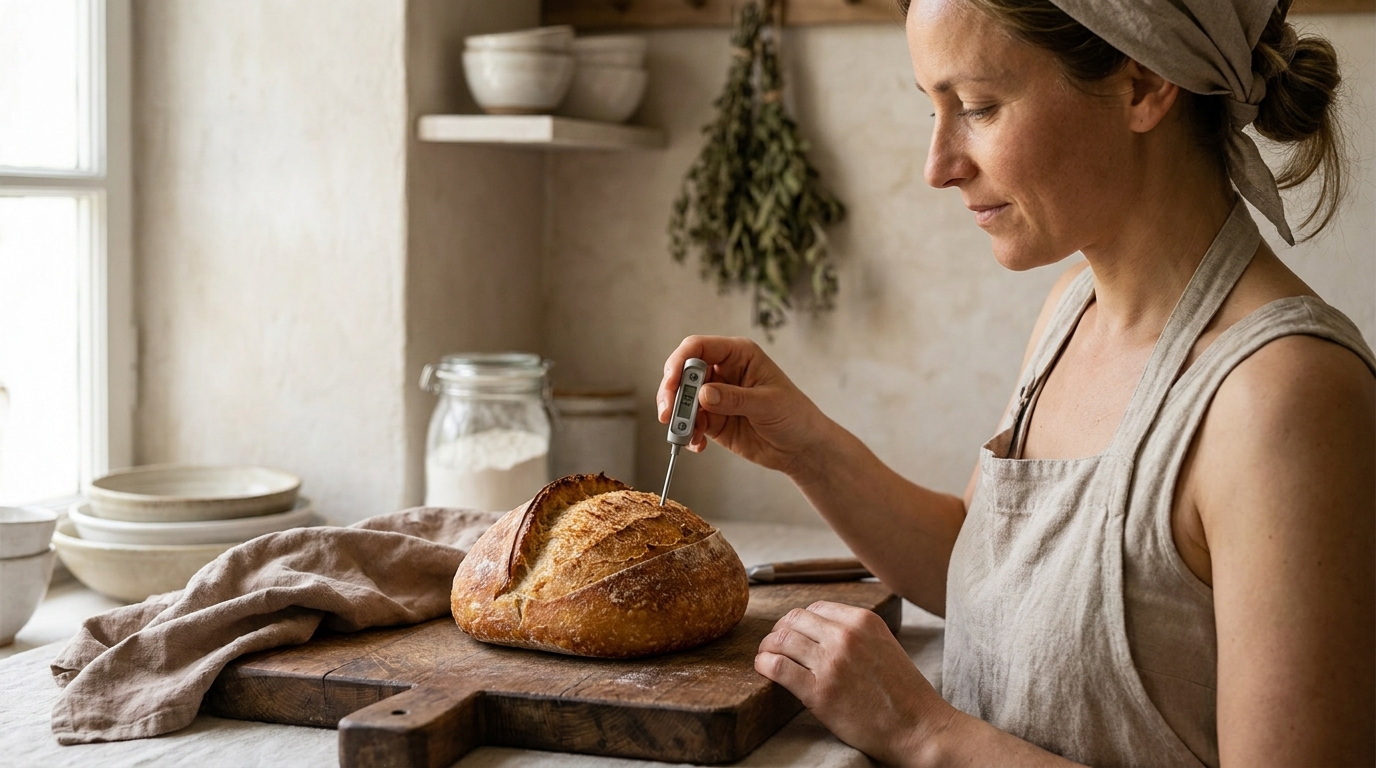
Quick practical answer: using a kitchen thermometer when baking
Short summary of when and why to use one
Using a kitchen thermometer when baking gives you two reliable pieces of information: the actual oven temperature and the internal temperature of the food. That reduces guesswork and helps you stop relying on bake time alone, which is especially useful for breads, dense cakes, and large roasts.
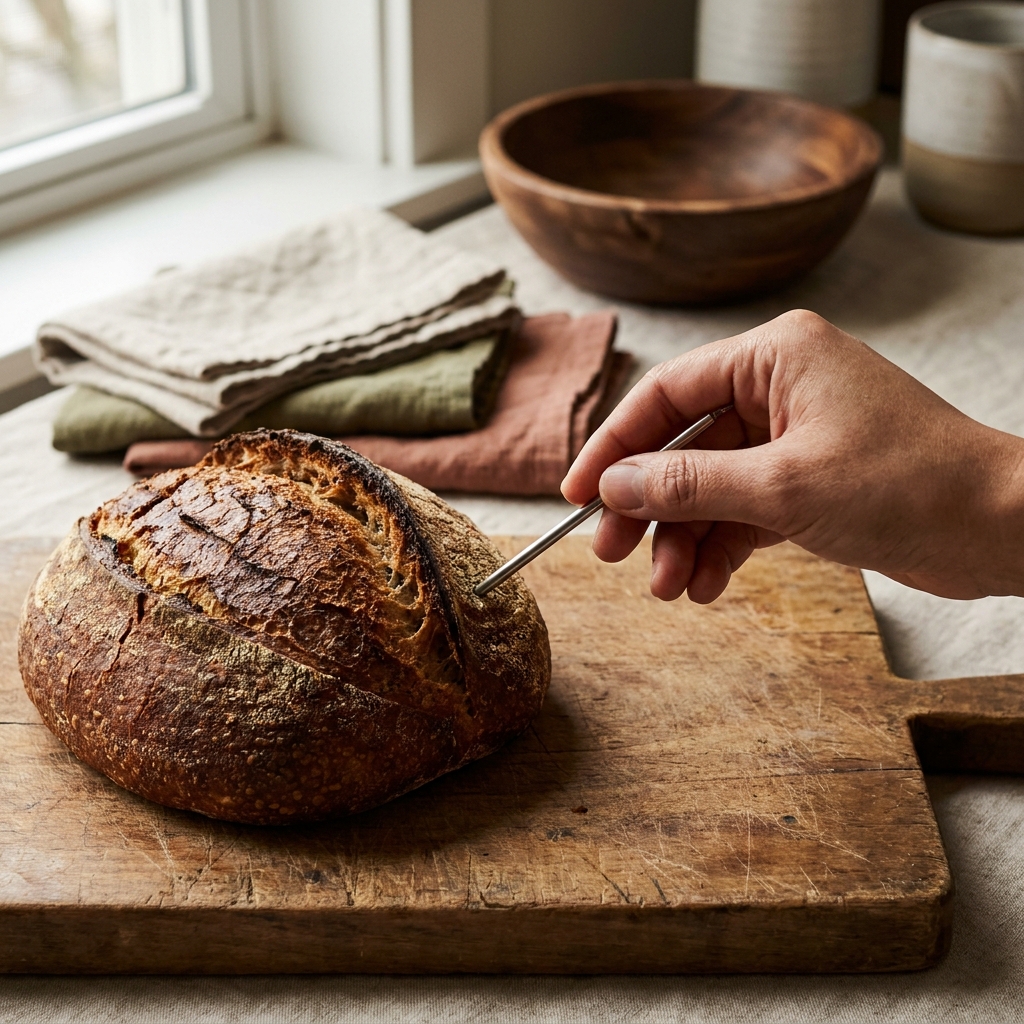
For many home bakers, the biggest payoff is fewer under baked centers and fewer over browned exteriors. A simple oven thermometer reveals how close the oven is to the set temperature, while a probe or instant-read lets you confirm the internal doneness of loaves, large cakes, and savory bakes.
What this article will teach you
This guide explains which thermometer types work best for baking, how to verify and calibrate them, and exactly where to place oven-mounted and probe thermometers. You will also find step-by-step checks for an oven that runs hot or cold, a list of common mistakes to avoid, and practical examples for sourdough, large cakes, and roasts so you can apply the method right away.
Which type of kitchen thermometer should you use for baking
Overview of common types
The three main styles most useful to home bakers are instant-read digital thermometers, leave-in probe thermometers, and oven-mounted dial or digital thermometers. Instant-read units are fast and handy for spot checks, but they are not designed to be left in food while baking. Leave-in probe thermometers are built to stay in the oven and report internal temperature during the bake. Oven-mounted thermometers sit on a rack and show the air temperature inside the oven.
Each type has strengths. If you want to confirm oven temperature, an oven-mounted thermometer or a dedicated oven probe gives a continuous view of air temperature. For bread, cakes and roasts the leave-in probe reports internal temperature without opening the door (see our baking guide). Instant-read thermometers are the quickest option when you want a one-off internal check near the end of a bake.
How to choose for your typical recipes
Pick by the problems you encounter most. If your oven seems to run off-target, prioritize an oven thermometer for diagnosing oven temperature accuracy. If loaves or large cakes finish with wet centers or dry crumbs, a leave-in probe that reaches the center is often the best purchase. If you only occasionally check internal doneness, a reliable instant-read is lighter on cost and still useful.
Key selection features to compare are response time, stated accuracy, length of probe, maximum heat rating, and cleaning method. A probe rated for oven temperatures should tolerate at least 200 C / 400 F if you bake at higher temperatures, and the probe length should reach the center of your typical loaf or roast without being blocked by bone or large air pockets.
Buying checklist
- Accuracy rating or stated tolerance, choose better than +/- 2 C where possible
- Probe length that suits your usual breads or roasts
- Heat rating suitable for oven temperatures if leaving in during baking
- Fast response for instant-read models
- Waterproof or easy-to-clean surfaces for hygienic use
When buying, prioritize a thermometer that solves your frequent problems rather than the cheapest option. Durability and ease of cleaning matter because a worn or dirty probe gives unreliable readings over time.
Step by step: how to use a kitchen thermometer in an oven and when to check internal temperature
Preparing and calibrating your thermometer
Before relying on any thermometer, do a simple calibration check. Two quick checks are an ice water check for a near-zero reference and a hot water check near boiling to confirm linear behavior. For the ice water check, fill a glass with crushed ice and a little water so the mixture is slushy, insert the probe without touching the glass sides, and wait for the display to stabilize. It should read about 0 C or 32 F. For the hot water check, heat water to a gentle boil and test the reading; it should be near boiling at your altitude. For additional oven calibration notes see the Thermoworks guide.

Placement for oven-mounted units
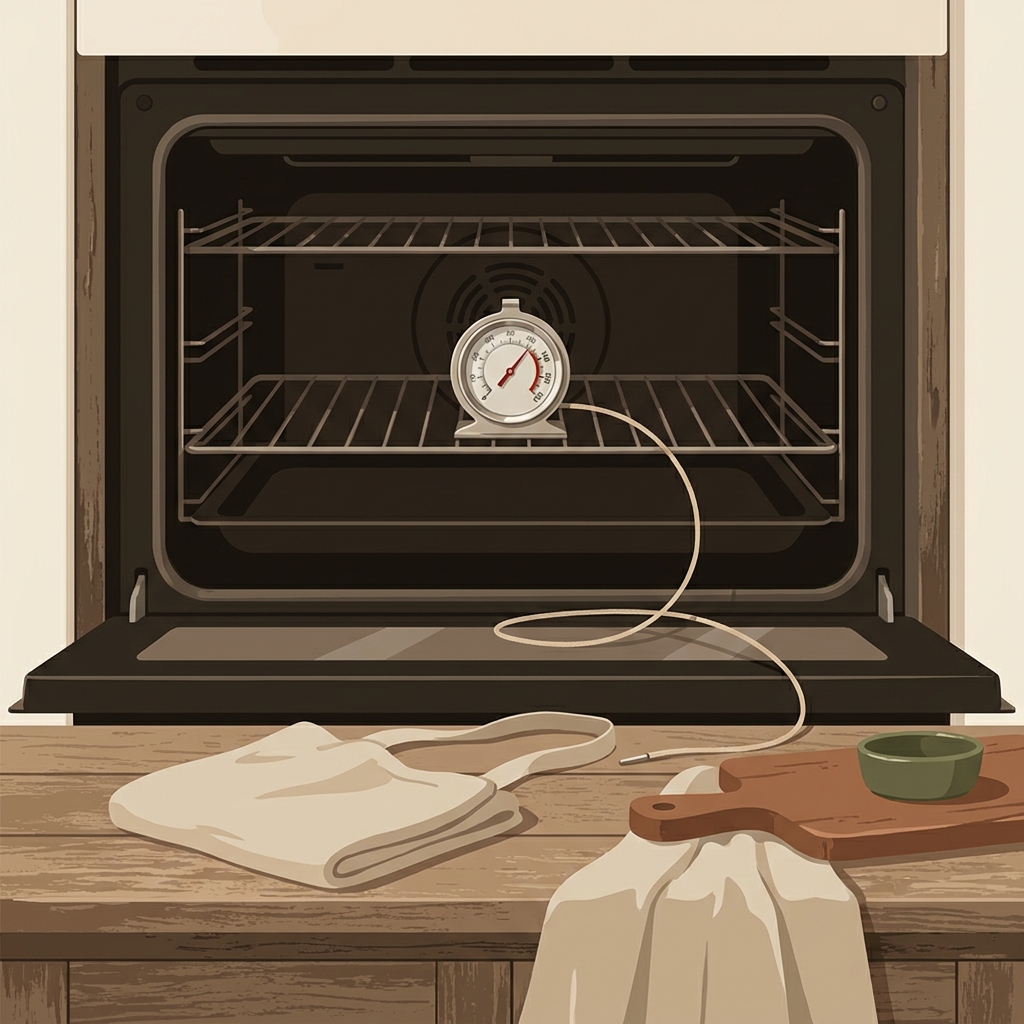
Place an oven thermometer in the center of the middle rack when testing oven temperature accuracy. Keep it away from walls and the back of the oven where heating elements cause hotter pockets. If your oven has a convection fan, position the thermometer so the fan does not directly blow on it, because local airflow can cause brief spikes in the reading.
When you are setting up a long bake and want to monitor oven temperature, leave the oven thermometer on the middle rack where it will measure the air surrounding most baking pans. Check it through the oven window when possible to avoid opening the door and disturbing temperatures.
Placement for probe thermometers for breads and cakes
For loaves and large cakes, insert the probe into the thickest part, aiming for the center but avoiding contact with pans, large air pockets, or very large holes. For a loaf, push the probe in from the side so the tip rests about 1 to 2 cm from the geometric center of the crumb. For a large round cake, insert the probe from the side towards the middle at a shallow angle so the tip sits in the center of the cake without breaking through to the bottom.
For roasts, insert the probe into the thickest muscle without touching bone, which conducts heat and gives a falsely high internal temperature. Mark the probe insertion depth with a small bit of heatproof tape if you want repeatable placement for the same recipe.
How do I use a kitchen thermometer when baking to improve results?
Use an oven thermometer to check oven temperature accuracy and a probe or instant-read to confirm internal doneness; calibrate simply with ice and hot water, place thermometers in the oven and food as described, and watch temperature trends rather than single readings.
How to read and interpret temperature during baking
After placement, wait for the thermometer reading to stabilize. For oven air thermometers that can take a minute or two to settle, allow at least five minutes after the oven indicates preheat before recording a value. For probes inside food, the display can take several minutes to reflect the internal temperature, particularly in large items; expect slow, steady climbs rather than rapid jumps.
Distinguish surface temperature from internal temperature. A probe reading shows internal temperature, which tells you about doneness. Surface browning or crust temperature can be very different; use visual cues for color and a probe for crumb or center set. If readings fluctuate by a few degrees, watch the trend rather than one instantaneous value.
Safety reminder: use oven mitts or a thick cloth when handling hot probes, and pull probes straight out to avoid tearing the crumb. If your probe has a cable that exits through the oven door, ensure the door is closed carefully around the cable so the seal and hinge are not stressed.
Checking and improving oven accuracy: decision criteria and troubleshooting
How to test your oven for accuracy
To test overall oven accuracy, place an oven thermometer in the middle of the center rack and preheat to a chosen set point. Once the oven indicates preheat, wait 10 to 15 minutes to let temperature stabilize, and then record the thermometer reading. Repeat this at a couple of common temperatures you use, for example 180 C and 220 C, to see whether the oven runs hot, cold, or close to expected across the range. See Whirlpool's guidance for additional calibration steps.
Record the offset at each temperature. If your oven consistently reads 10 C low at both 180 C and 220 C, that is an offset you can plan around. If the offset changes across temperatures, it suggests uneven heating or a failing thermostat that may need professional attention.
What to do if your oven runs hot or cold
If the oven reads a consistent few degrees off, adjust your baking expectations or temperature where you can. Small offsets can be compensated by changing bake temperature or time in recipes, but be cautious and test with a single recipe before changing across the board. For uneven performance, try switching rack positions: many ovens have a sweet spot where heat balances better. (Maytag outlines steps for adjusting oven temperature here.)
Common user fixes include allowing a longer preheat period so the oven interior, racks and pans reach equilibrium, avoiding opening the door during critical early stages, and rotating pans partway through the bake when recipes allow. Check that the gasket around the oven door is clean and seats well, because heat loss there causes uneven temperatures.
quick oven temperature test method for home bakers
When to call a technician
Consider professional service if your oven shows wildly inconsistent readings, large temperature swings during a single bake, or if the oven fails to reach the set temperature at all. Persistent hot spots, failing heating elements, or thermostat problems are signs an oven needs service rather than user adjustment.
If the oven is old and repairs are costly, weigh the cost of repair against replacement in light of how often you bake and whether precise oven temperature accuracy is a priority for your cooking projects.
Common mistakes and how to avoid them
Typical user errors
Common mistakes include inserting the probe too close to the surface or to the pan, placing the oven thermometer near the side or back where a heating element skews the reading, and relying on cook time alone instead of checking internal temperature. Another frequent error is not letting the oven reach thermal equilibrium before starting the timer, especially when the recipe expects the oven to be fully stabilized.
Avoid using an instant-read as a leave-in probe if it is not rated for oven temperatures, and avoid touching bone or pan surfaces with a probe which will give misleadingly high readings. Also watch that cables do not drape across open flame or directly contact heating elements.
How to read misleading readings
Fluctuating readings can be normal while the oven cycles; watch trends. If internal temperature drops when you open the door, wait and recheck after the oven recovers rather than assuming the dish failed. If a probe registers a sudden high temperature that does not match the dish surface, check for bone contact or probe placement in an air pocket.
Steady readings that rise slowly are what you want for internal temperature checks. If the display never changes after several minutes inside a loaf, the probe tip may be stuck in a dense pocket of crust or against a pan; reposition and test again in a new insertion point.
Pre-bake checklist
- Calibrate thermometer with ice or boiling water if you have not used it recently
- Place oven thermometer on middle rack and confirm preheat readings
- Plan probe insertion so the tip reaches the thickest part without touching pan or bone
- Allow oven to preheat fully and stabilize for at least 10 minutes when testing accuracy
- Use oven mitts and secure any probe cable to avoid door damage
Practical scenarios and worked examples for baking and roasting
Sourdough and yeast bread internal targets and probe placement
When checking a loaf, aim the probe tip at the center of the crumb but avoid contacting the bottom of the pan. For a typical country loaf, the internal temperature that indicates a set crumb is often near the upper mid-range of common targets. Use the probe to confirm that the interior is no longer very soft and that readings climb steadily as the loaf finishes.
A narrative example: a baker slides a sourdough loaf into a preheated oven, leaves a leave-in probe inserted from the side so the tip sits near the center, and watches the internal display rise steadily. When the reading reaches the chosen finish range, the baker removes the loaf and confirms the crust color before letting it cool. This approach reduces guesswork about whether the center is set.
Large cakes and loaf breads
Large bundt or sheet cakes can hide a soft center. Insert a probe from the side toward the middle and expect slower temperature climbs than in small cupcakes. For loaf breads baked in pans, inserting the probe from the side at mid-height often provides a reliable center reading without disturbing the cake or loaf top surface.
Combine oven thermometer readings and probe checks: if your oven reads low by 10 C, the cake may need a longer bake or a slightly higher temperature. Use the oven thermometer to decide which adjustment you prefer, and use the internal reading to stop the bake when the center is set.
Roasts and other savory bakes
Closing checklist and best practices: calibrate your thermometer occasionally, keep an oven thermometer on the middle rack for periodic checks, insert probes into the center of the largest mass you are cooking while avoiding bone and pan contact, and watch trends rather than a single instant reading.
Frequently asked questions
How often should I calibrate my thermometer?
Check calibration every few months or when accuracy seems off, and perform ice and hot water checks after dropping the device or long storage.
Can I leave an instant-read thermometer in the oven?
Only if the manufacturer explicitly rates it for oven use; otherwise use a leave-in probe designed for continuous oven temperatures.
What internal temperature indicates a fully baked loaf?
Internal targets vary by loaf type, but a steady, final internal temperature near common textbook ranges for bread indicates a set crumb; rely on recipe guidance and probe trends.
Using thermometers in the kitchen is about reducing uncertainty. Small investments in a quality oven thermometer and a probe pay back in fewer failed bakes and more confidence in timing and doneness. Start with calibration checks and simple placement rules, and then use these methods selectively for the recipes where they help most. Over time you will rely less on guesswork and more on measured temperature readings to guide your bakes.
References
- https://stirreddaily.com/guides/baking-and-bakeware/
- https://stirreddaily.com/guides/prep-tools/
- https://stirreddaily.com/technique-atlas/roast/
- https://blog.thermoworks.com/thermal-secrets-oven-calibration/
- https://www.whirlpool.com/blog/kitchen/how-to-calibrate-an-oven.html
- https://www.maytag.com/blog/kitchen/how-to-calibrate-an-oven.html