
The journal
Why fold instead of stir? A practical guide for lighter bakes
folding vs stirring baking batter explained, with step-by-step folding technique, decision rules, and fixes to keep cakes and quick breads light.
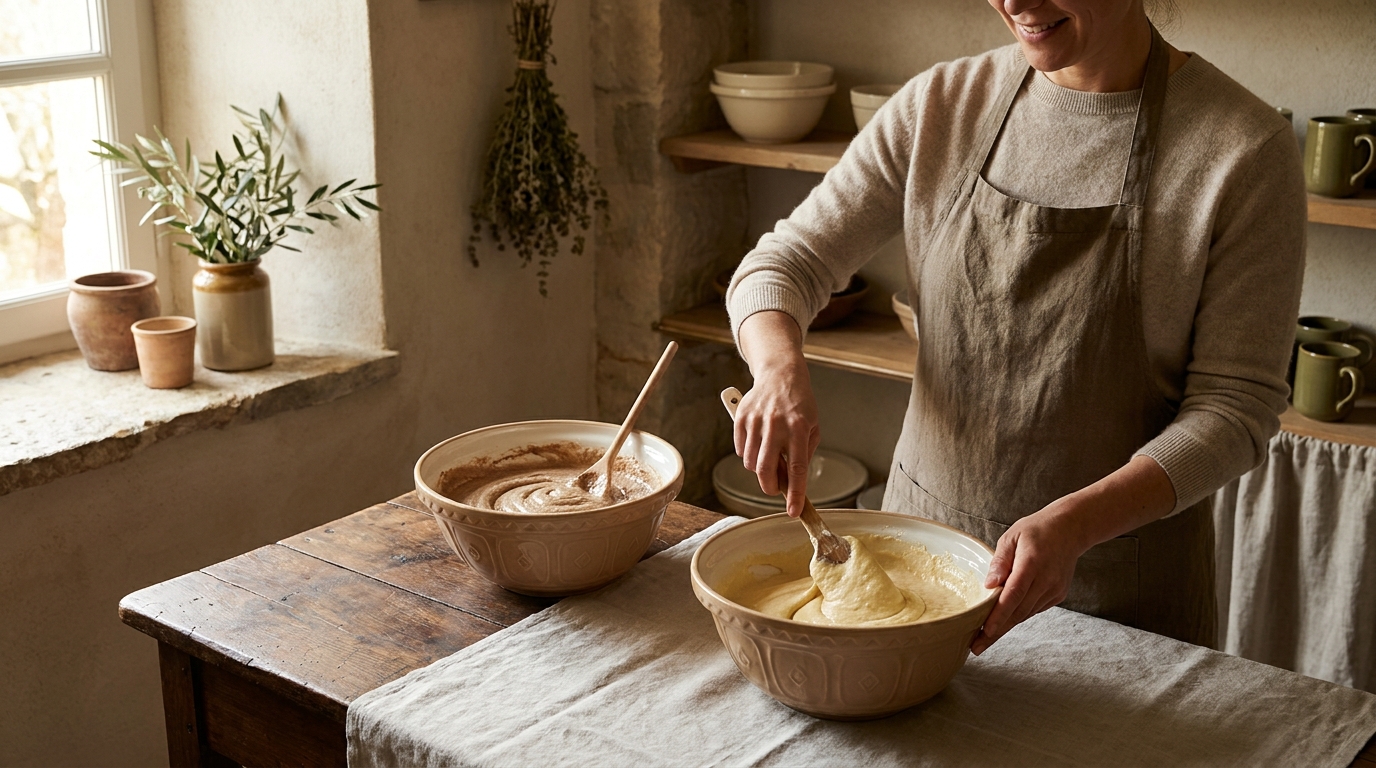
Why fold instead of stir?
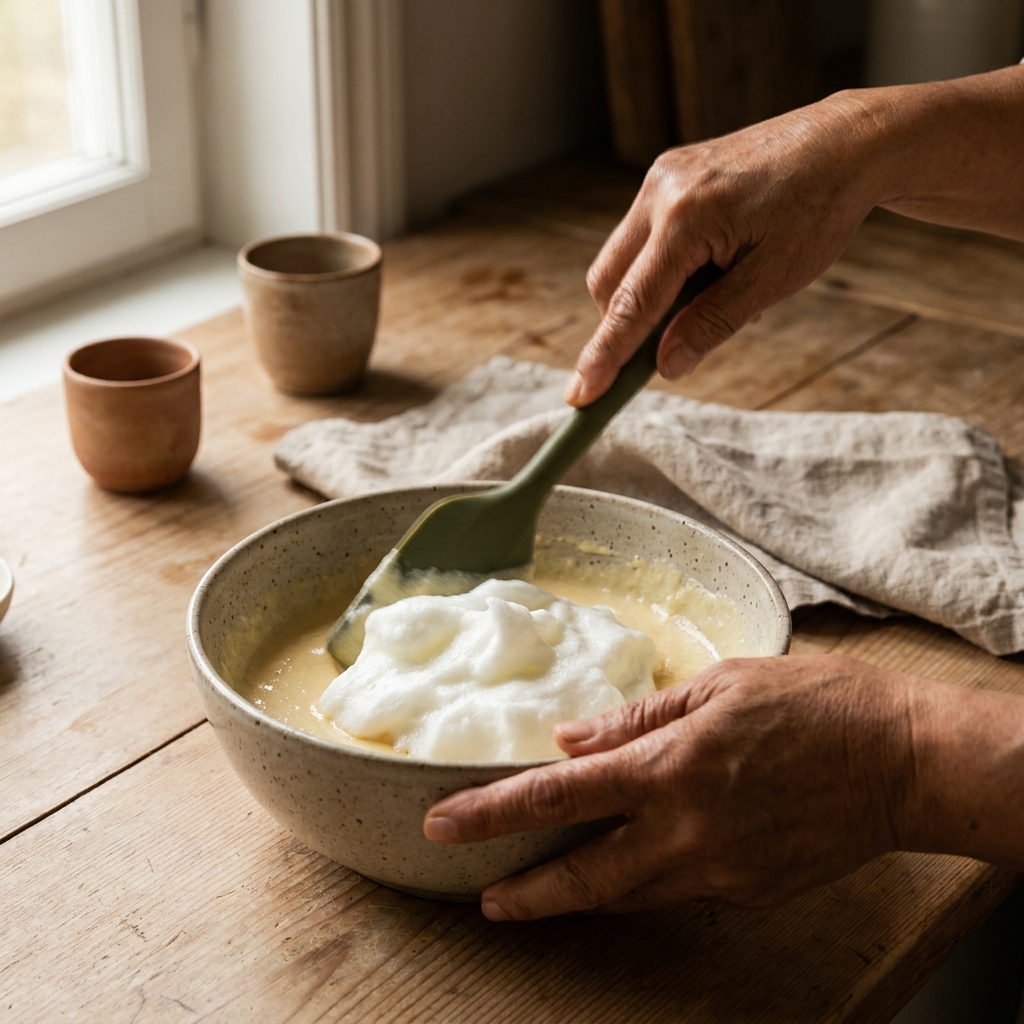
Folding is useful when a recipe needs you to incorporate whipped egg whites, whipped cream or flour into an airy mixture without losing too much volume. Stirring in tight, vigorous circles can knock out that air. Folding uses broader lifting movements to bring the ingredients together.
The goal is an evenly mixed batter with its aeration largely intact. It is not to use the fewest strokes at any cost: a pocket of unmixed flour or egg white is still a mixing problem. Follow the recipe’s visual cues, because a mousse, a sponge and a muffin batter do not look the same when ready.
How to fold with a spatula
- Use a bowl with enough space to move the mixture without spilling.
- Put the spatula down through the centre and reach the bottom.
- Sweep along the base and up the side, lifting the mixture over itself.
- Turn the bowl a little and repeat, checking the bottom for unmixed ingredients.
- Stop when the ingredients are combined and no unwanted dry pockets remain.
Use a flexible spatula for this approach. Hold the bowl steady, then rotate it between strokes rather than chasing one small area of batter around the bowl.
Do you always need a spatula?
No. A whisk can also be used with a lifting, folding motion; that is different from beating rapidly in circles. King Arthur Baking explains why a whisk can work well for folding. Choose the tool and motion suited to the recipe rather than assuming one utensil always destroys bubbles.
Adding egg whites to a heavier base
Some recipes first mix a small portion of the whipped whites into the heavier base to lighten it, then gently fold in the remainder. Other recipes specify a different order. Keep the direction of the recipe: do not automatically pour a large amount of heavy batter into a delicate bowl of foam.
Have the tin and oven ready when the recipe calls for prompt baking. A carefully mixed batter can still lose volume while you search for equipment. Check any ingredient-temperature requirements before combining mixtures, particularly when melted chocolate or warm custard is involved.
Folding, stirring and kneading do different jobs
For a whipped-foam cake, preserving aeration is central. For a muffin or quick bread, gentle mixing also helps avoid excessive flour mixing. For bread dough, the recipe may deliberately require more gluten development. Use the method named in the recipe rather than substituting vigorous stirring because it looks faster.
Folding berries or chocolate pieces into an already mixed batter is another use of the motion. Distribute the additions without repeatedly working the whole batter. Floury streaks and small batter lumps are different things; a recipe may allow small lumps but should not leave pockets of dry flour.
What if the mixture deflates?
Stop mixing once the ingredients are combined. Do not try to whip a finished cake batter back into a foam, add extra egg whites at random or change the baking tin as a general repair: those changes also alter the recipe. Continue with the recipe and expect that the texture may differ, or start again if the structure is crucial.
On the next attempt, check the whipping stage, ingredient temperatures and mixing order. Note what you changed so that you can improve one part of the process at a time.
A useful first practice
Choose a small, complete recipe that explicitly calls for folding. Read it through, prepare the equipment, and observe the mixture before and after each addition. Compare your result with the recipe’s expected texture. Do not taste raw batter containing uncooked flour or eggs.
Our folding technique guide, baking guide and kitchen tools can help you plan the next bake.
Frequently asked questions
How many folds should I use?
There is no universal number. Bowl size, quantity and ingredient density change how long mixing takes. Watch for even incorporation rather than counting to a fixed target.
Can I fold with a whisk?
Yes, when the recipe and mixture suit it. Use a gentle lifting motion, not vigorous beating.
Does folding guarantee a light cake?
No. Ingredient quantities, whipping, oven temperature and baking time still matter. Folding protects one part of the structure; it cannot compensate for every other change.