
The journal
What is Cajun roux?
A clear definition of Cajun roux plus practical, source-backed steps to make one safely and choose the right color for gumbo or étouffée.
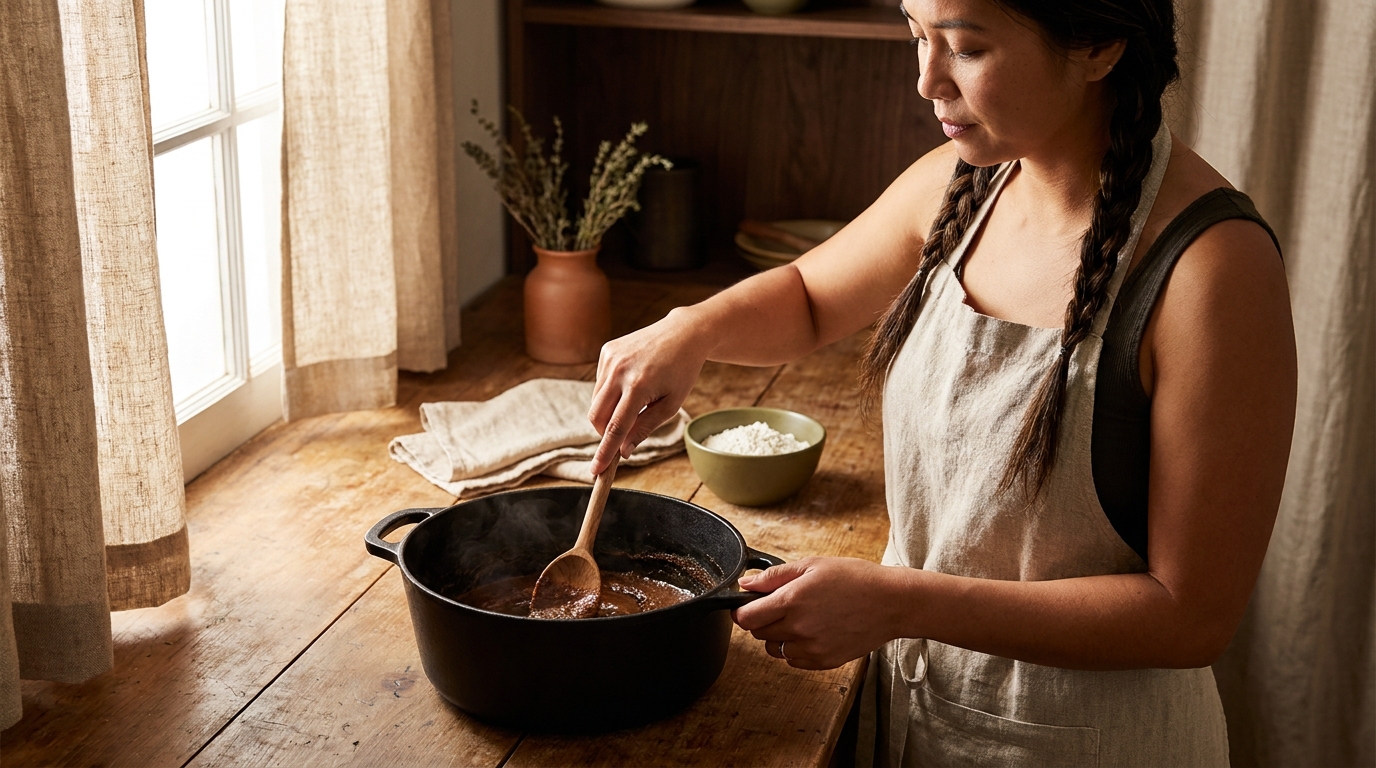
A Cajun roux is a cooked mixture of flour and fat, most often a neutral oil or lard rather than butter, used to build both flavor and body in Louisiana dishes like gumbo and étouffée. As it cooks from pale to dark brown, the flavor deepens while its thickening power decreases, so color is a deliberate recipe choice Creole/Cajun: Know Your Ingredients.
Choose the fat and follow one recipe ratio
Follow the flour-to-fat ratio in the recipe you are actually making. Equal weights and equal cup measures are different formulas: oil and flour do not weigh the same per cup. The Gumbo Pages author describes a volume-based method, often using a little more flour than oil Creole/Cajun: Know Your Ingredients. A kitchen scale helps you hit the ratio repeatedly; if you’re new to scaling, see our short explainer on what tare means on a kitchen scale and our guide to measuring flour correctly.
- Use a heavy pot (cast iron or other thick-bottomed), add the oil or lard, then whisk in the flour.
- Cook over low to moderate heat, stirring constantly and scraping the bottom and corners so no flour settles and scorches.
- Control heat so the flour toasts evenly. If you see black specks or smell burnt toast, discard and start over; a scorched roux will taint the dish Creole/Cajun: Know Your Ingredients.
Plan for patience: a dark roux can take up to about 20-25 minutes over higher heat with expert stirring, or up to roughly an hour at low heat. Time varies with batch size, pot, and burner, so go by color and aroma more than the clock Creole/Cajun: Know Your Ingredients. For an extended look at a traditional dark roux workflow and why constant stirring matters, see this step-by-step from Acadiana Table How To Make A Dark Cajun Roux.
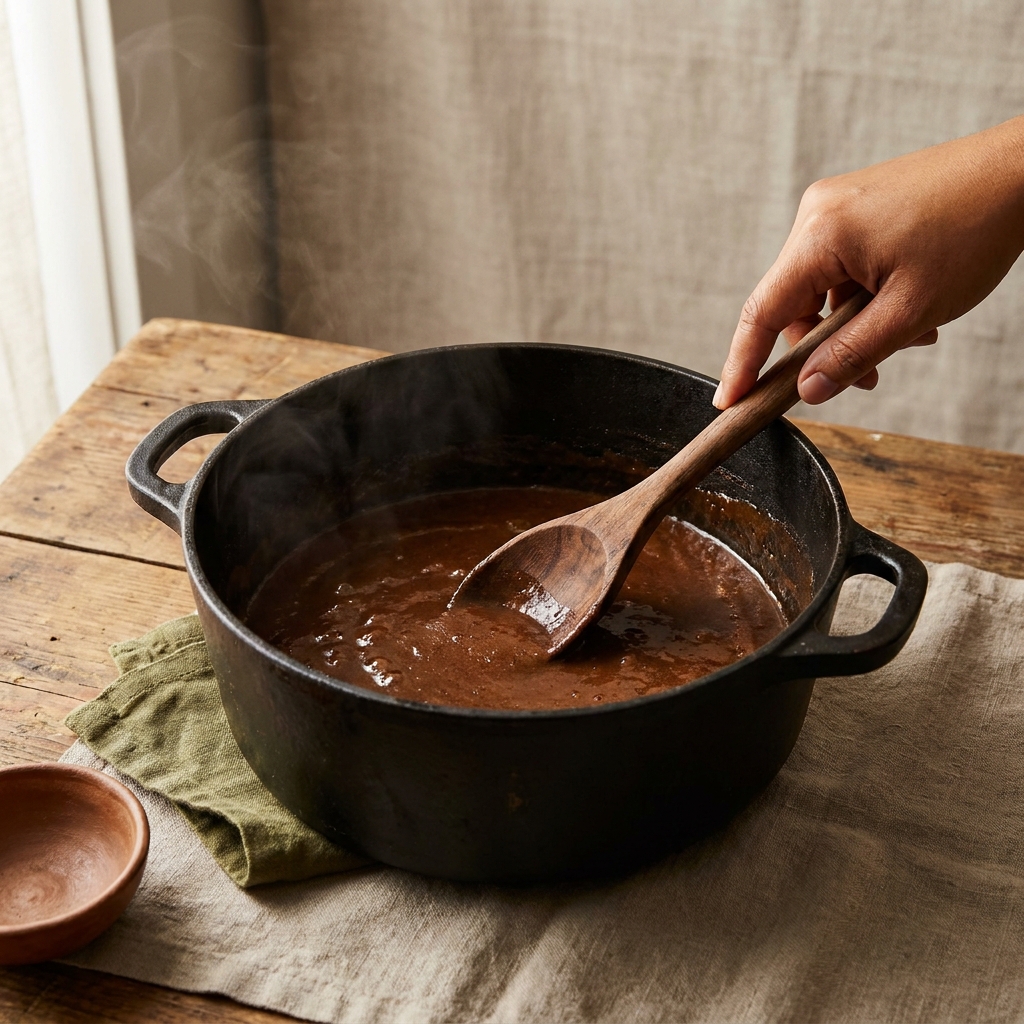
Roux colors and what they do
- Light/blond: pale to tan; strongest thickening, mild flavor.
- Medium/“peanut butter”: nuttier flavor with moderate thickening.
- Dark (milk to bittersweet chocolate): deep roasted, nutty notes with the least thickening power Creole/Cajun: Know Your Ingredients.
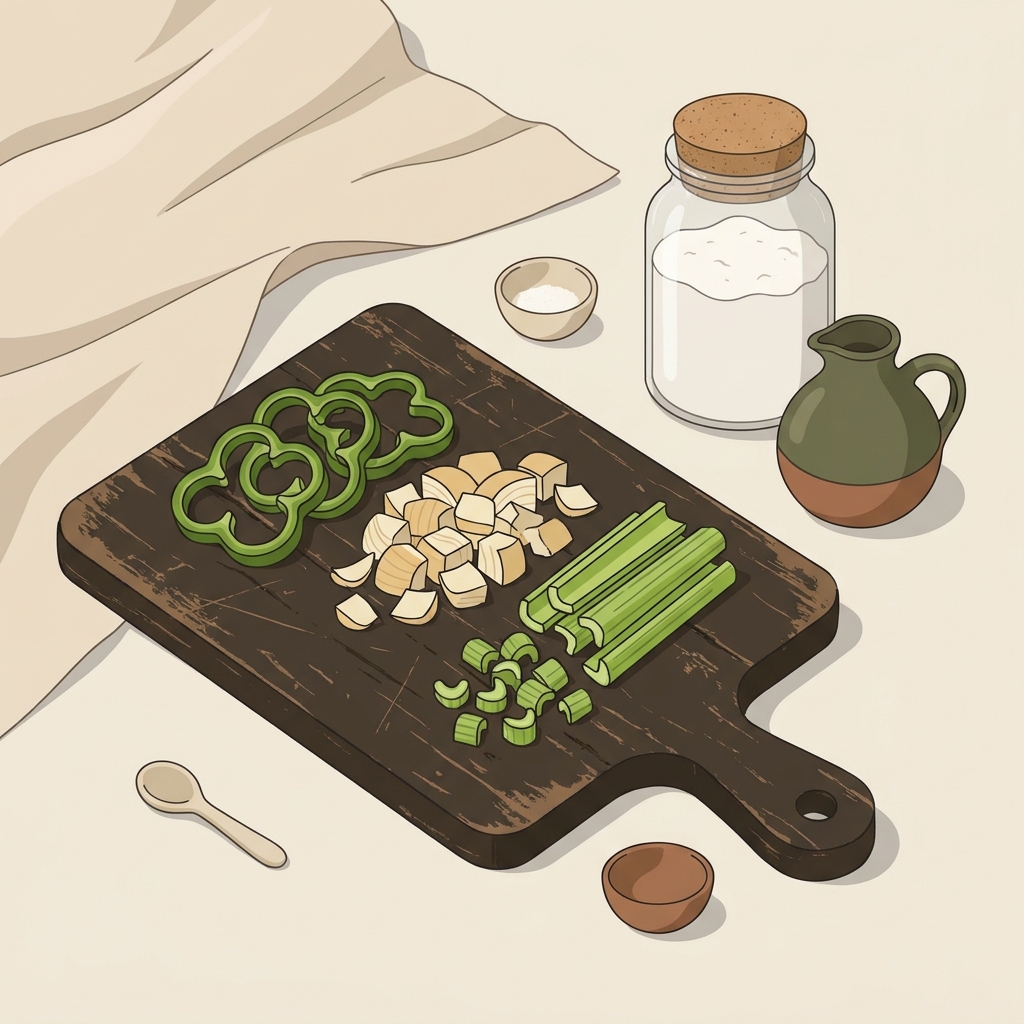
To slow further darkening once you reach your target shade, add the “holy trinity” of onion, celery, and bell pepper to the hot roux; it helps slow further browning and begins building the base; it does not instantly stop a very hot pot from cooking Creole/Cajun: Know Your Ingredients.
Worked example
For a small pot of gumbo: a recipe may specify 1/2 cup neutral oil and 1/2 cup all-purpose flour. Those are equal volumes, not equal weights; keep the stated recipe’s quantities and do not silently convert them to a weight ratio. Cook, stirring constantly, until the roux is a dark chocolate brown. Following that recipe’s sequence, add the prepared onion, celery and bell pepper carefully to slow further browning and proceed with stock and proteins. Expect bold, toasted flavor and modest thickening from a dark roux Creole/Cajun: Know Your Ingredients. For an étouffée, stop earlier at a medium “peanut butter” color for a balance of body and aroma.
Choosing the fat: why oil or lard for Cajun dark roux
Butter-based roux are classic in French and Creole cooking, but butter can scorch at the longer, hotter cooking needed for a very dark Cajun roux. For deep brown roux, use oil (peanut oil is a common high-heat choice) or lard; reserve butter for lighter roux cooked gently Creole/Cajun: Know Your Ingredients.
Safety note: hot roux is extremely hot and sticky. Prepare additions before starting, keep hands away from the hot mixture, stir steadily and avoid splatters; adding moist vegetables can release steam. Keep pot handles secure and move off the heat if browning is getting ahead of you. If it burns (black flecks, acrid smell), discard and restart Creole/Cajun: Know Your Ingredients, How To Make A Dark Cajun Roux.
Short on time? Jarred roux products exist and can be convenient, though flavor and handling differ by brand; they’re a shortcut, not a perfect stand-in for a fresh, cooked roux How To Make A Dark Cajun Roux.
Before you start a Cajun roux
Quick FAQ
Can I use butter for a Cajun roux?
For a very dark roux, butter is prone to scorching; oil or lard is preferred. Butter is fine for lighter roux cooked gently Creole/Cajun: Know Your Ingredients.
How long does a dark roux take?
It depends on heat, pot, and quantity. As a reference point, a dark roux can take around 20-25 minutes at higher heat with expert whisking, or up to about an hour at low heat. Use color and aroma to judge doneness rather than a fixed timer Creole/Cajun: Know Your Ingredients.
What should I add after the roux?
Follow the recipe’s sequence to add onion, celery and bell pepper carefully; this helps slow browning and starts the base, then proceed with stock and the proteins your dish calls for Creole/Cajun: Know Your Ingredients.

Related guides
Optional equipment for this guide
You need suitable cookware and a stirring tool, not a new appliance. Compare the pan size and access to its corners before choosing equipment.
As an Amazon Associate I earn from qualifying purchases. These are researched options, not hands-on test results. Check the exact size or model, current price and availability on Amazon.
| Product option | Fit and limits to check | Retailer |
|---|---|---|
| Product imageLodge 10.25-inch cast-iron skillet | A 10.25-inch bare cast-iron skillet for a suitable roux batch. It retains heat and the handle gets hot; choose a batch and heat level you can stir safely. | View on Amazon |
| Product imageOXO Good Grips 11-inch balloon whisk | A balloon whisk for a pan and roux quantity it can reach comfortably. Check cookware suitability; a flat whisk or spoon you already own may suit the corners better. | View on Amazon |