
The journal
Sharpen or hone first? The simple rule for home cooks
Hone first for routine upkeep. If a careful hone doesn’t restore clean cutting, sharpen. What that means, quick tests to run, and how to do each safely.
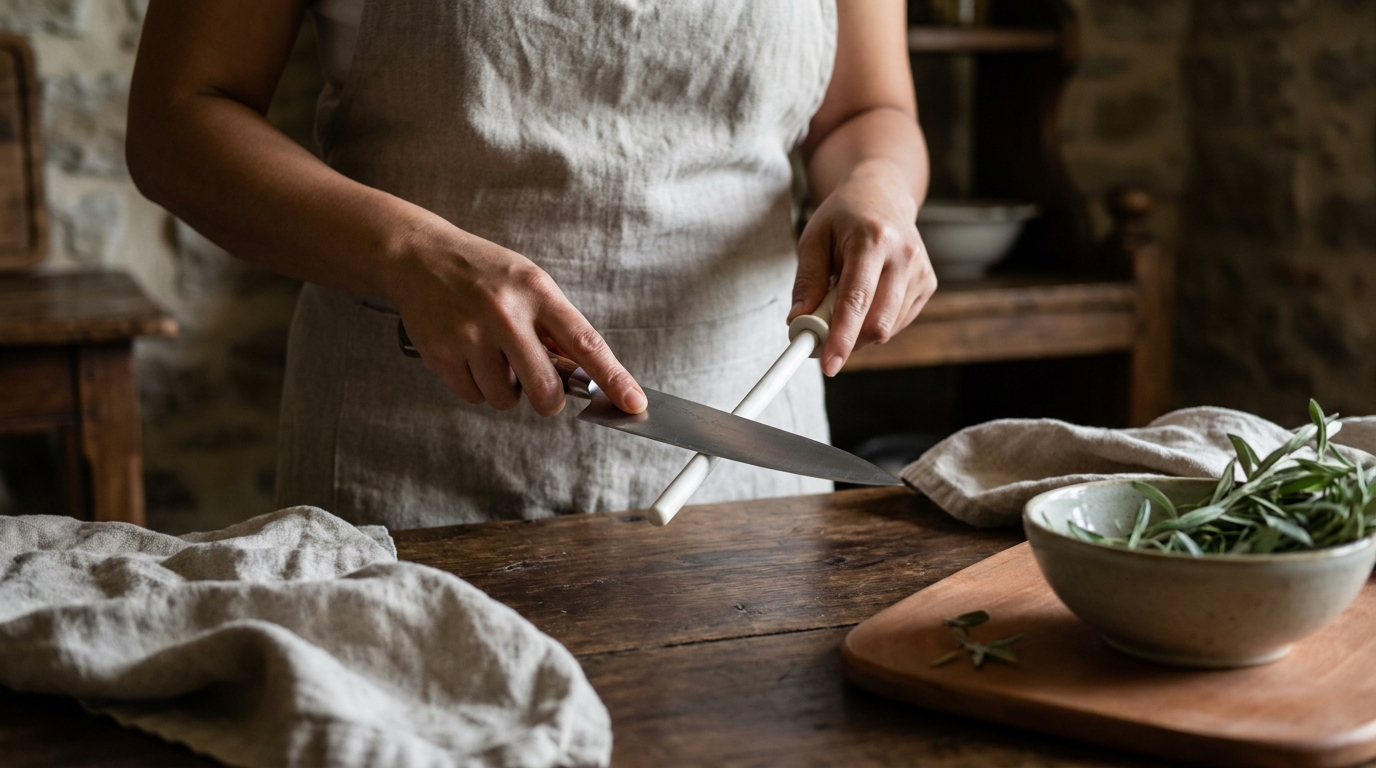
Hone first. If a careful hone doesn’t bring back clean cutting, it’s time to sharpen. Honing realigns the edge; sharpening removes metal to recreate it (Shun Cutlery, KitchenKnifeGuru).
Honing vs. sharpening in plain terms
Honing realigns a rolled or slightly bent edge, typically with a steel or ceramic rod, and does not aim to remove metal. Sharpening removes steel with an abrasive (stones, systems) to form a new apex (Shun Cutlery; KitchenKnifeGuru). Because sharpening is material-removing, you do it far less often than honing (Messermeister).
How to decide: quick tests after a short hone
Two simple checks
After a careful hone, test the edge:
- Paper test: slice cleanly through a sheet of paper (Perkin Knives; Messermeister).
- Tomato test: the blade should break tomato skin without crushing (Messermeister).
If either test fails after honing, sharpen the knife.
Clear signs you must sharpen
- Visible chips or nicks in the edge (Perkin Knives).
- Dragging or tearing through food even after honing (Messermeister).
How to hone a kitchen knife correctly
Angle, pressure and motion
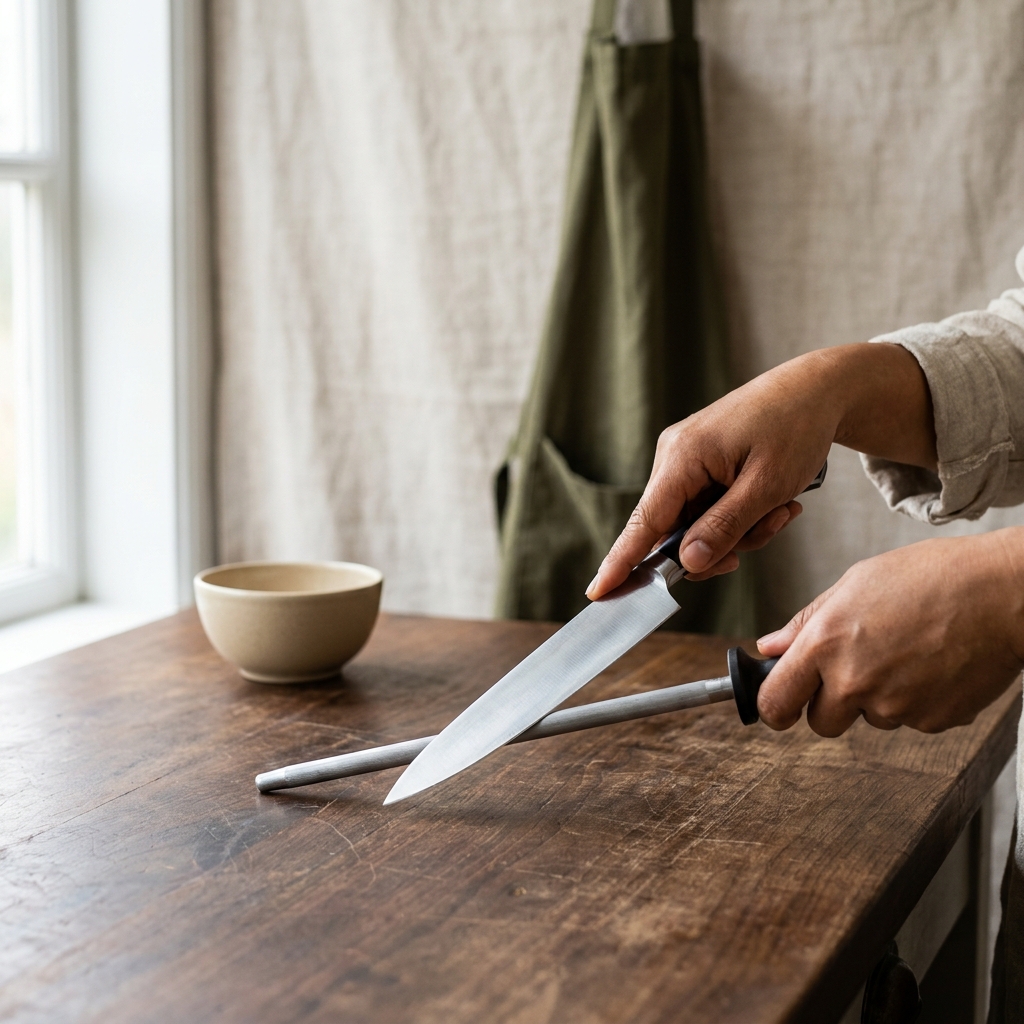
Stand the rod tip on a stable surface. Place the blade at roughly a 15-20 degree angle and make light, even strokes from heel to tip, alternating sides. Keep the angle consistent and the pressure gentle (Perkin Knives; Shun Cutlery). With harder steels, favor a light touch since harder edges tend to be more brittle (Brod & Taylor).
Note: Fine ceramic rods can remove a little metal; treat them as a gentle touch-up and avoid heavy pressure (KitchenKnifeGuru).
When and how to sharpen
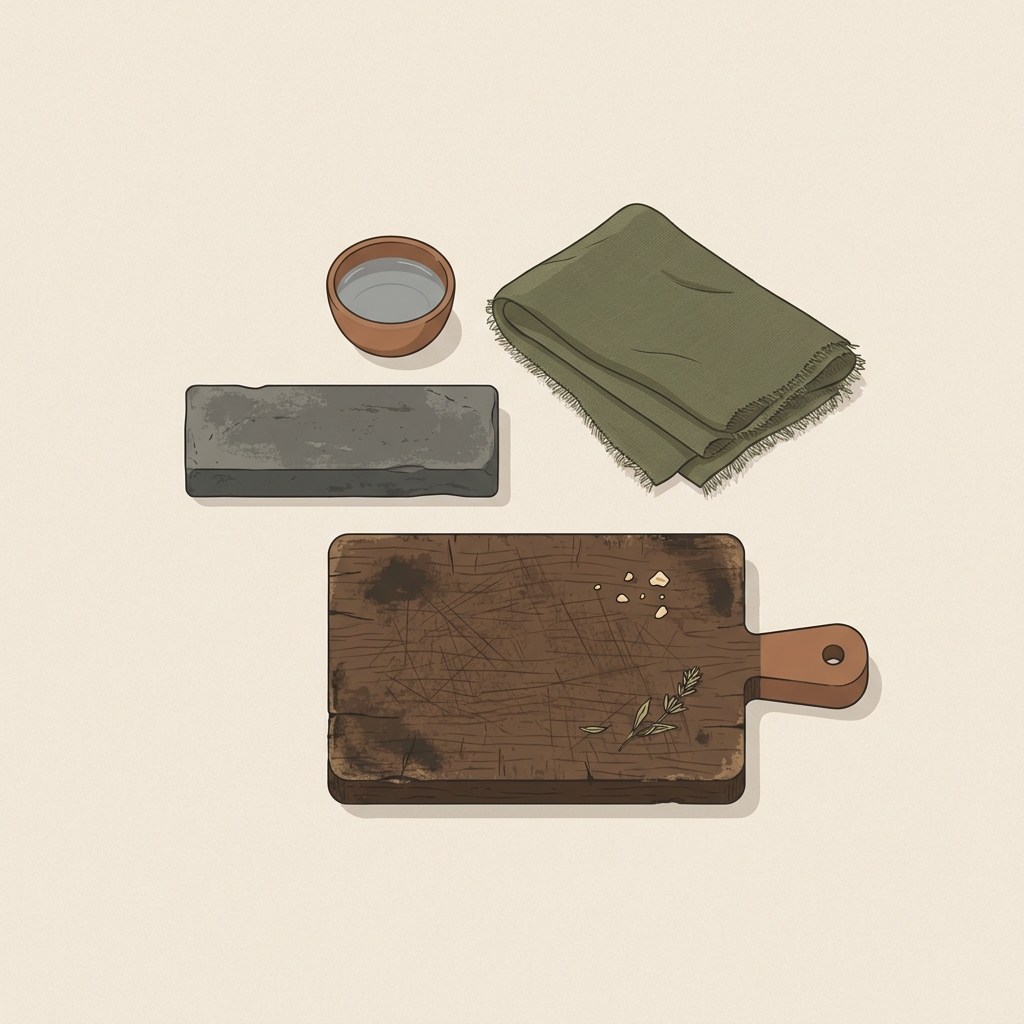
Sharpen only when honing no longer restores performance or the edge is damaged. Use a whetstone and maintain a steady bevel angle as you work; sharpening intentionally removes metal to recreate a clean apex (Messermeister). Many home cooks find once-a-year sharpening sufficient, while heavier users will sharpen more often (Shun Cutlery; Messermeister).
If you’re unsure about technique, consider a professional service to avoid unnecessary metal removal.
Routine and common mistakes
- Hone regularly (many cooks hone daily or weekly); sharpen far less often (Shun Cutlery).
- Don’t expect honing to fix chips or heavy dulling; that needs sharpening (Perkin Knives).
- Avoid excessive force when honing; it can worsen the edge or cause chipping on hard steels (Brod & Taylor).
- Use a consistent angle and alternate sides so the bevel stays even (Perkin Knives).
- Remember that dull knives require more pressure and can be riskier to use; keep up with maintenance (Messermeister).
Decide: hone or sharpen today
FAQ
Will a honing rod make a very dull knife sharp?
No. Honing realigns a rolled edge; sharpening removes metal to restore true sharpness (source).
How often should I hone and sharpen?
Hone regularly (daily or weekly depending on use). Sharpen when honing no longer helps; for many home cooks that’s about once a year (Shun Cutlery; Messermeister).
What angle should I use when honing?
Match the knife’s bevel. Many kitchen knives respond well around 15-20° with light, even strokes (Perkin Knives).

Related guides
Sources and further reading
- Sharpening vs Honing: Key Differences Explained | Shun Cutlery
- How Often Should You Sharpen and Hone Your Knives? | Messermeister
- How to Hone a Knife and Keep It Sashimi Sharp | KitchenKnifeGuru
- Honing vs. Sharpening: How to Hone & Sharpen a Knife – Perkin Knives
- The Science of Knife Sharpening | Brod & Taylor