
The journal
How long to bloom spices in oil (for whole spices)
Whole spices usually bloom in hot oil for about 10 to 60 seconds, stopping as soon as they sizzle, pop, and smell aromatic. Practical cues, heat control, and step-by-step tempering.

About 10 to 60 seconds. For whole spices, bloom them in hot oil until they actively sizzle or pop and smell clearly aromatic, then reduce the heat and follow the recipe’s next step promptly to limit further frying. Rely on aroma, sound, and slight color change, not just the clock TwoSleevers tadka guide; Spice Trader guide; Tofu World guide.
What blooming looks and sounds like with whole spices
Blooming whole spices (often called tempering or tadka) means heating them briefly in oil so fat-soluble aromatics dissolve into the fat and perfume the dish. You are done when:
- Seeds sizzle or mustard seeds begin to pop
- A heady aroma rises from the pan
- Color deepens slightly, without blackening
These cues usually arrive fast, within a minute at typical stovetop heat TwoSleevers tadka guide; Spice Trader guide. Ground spices tend to bloom even faster, often in about 30 seconds or less Milk Street: Bloom your spices.
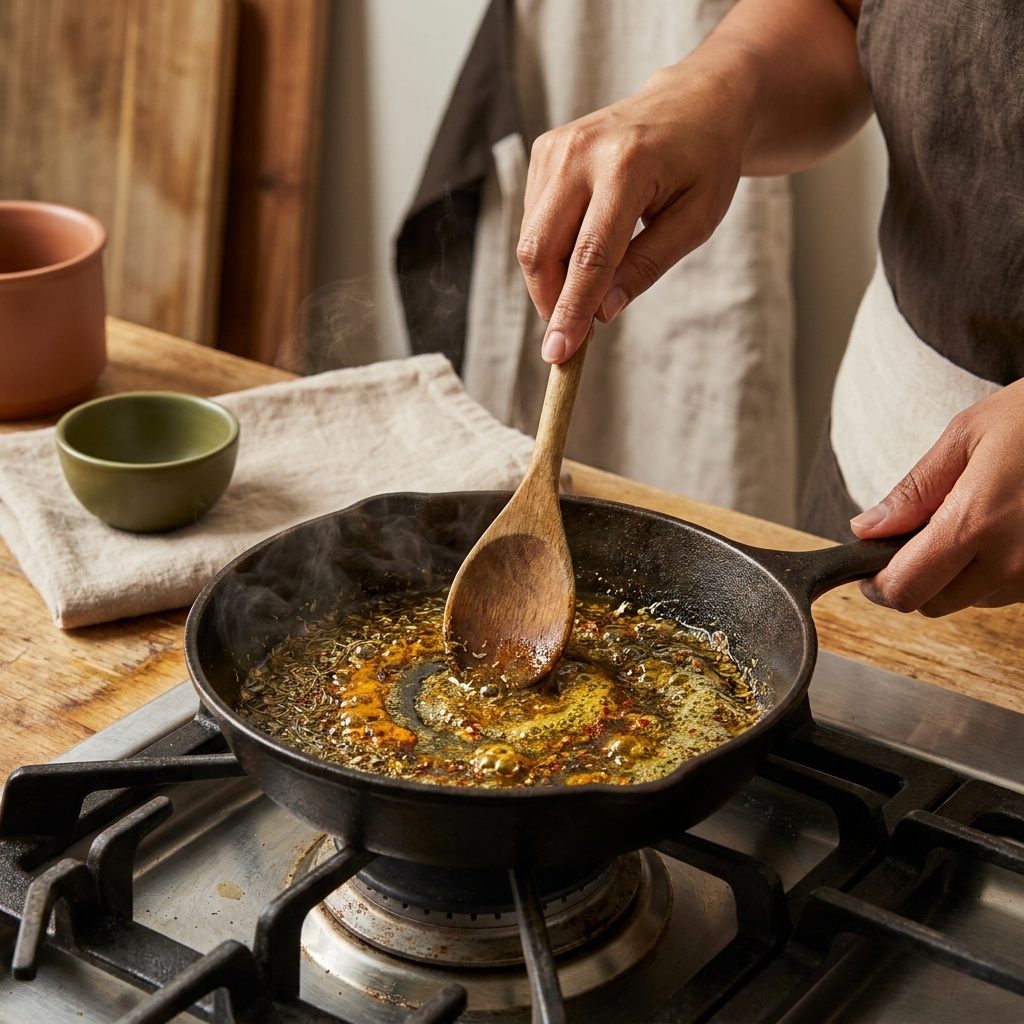
Step-by-step: tempering whole spices in oil
- Measure first. Have seeds and the next ingredient (onion, garlic, tomatoes, or liquid) ready to go. Once spices bloom, you need to reduce the heat and continue promptly using the recipe’s sequence TwoSleevers tadka guide.
- Heat the fat. Use ghee or a neutral oil. Aim for shimmering, not smoking. Use the recipe’s heat level and watch the particular spices and fat; there is no single temperature that suits every combination Tofu World guide.
- Test the temperature. Drop in a single cumin or mustard seed; if it sizzles promptly, the oil is ready TwoSleevers tadka guide. If you use stainless steel often, these readiness cues help: How to tell when a stainless steel pan is ready.
- Add the hardy whole spices first. Mustard seeds, cumin, fennel, fenugreek, cloves, cinnamon, or cardamom pods go in before delicate items. Stir and watch/listen for sizzle or popping, typically 10-20 seconds for the first signs Tofu World guide.
- Layer remaining aromatics. Add dried chiles and curry leaves next, then sliced garlic or ginger briefly so they turn fragrant but not dark. Spices should stay aromatic and lightly colored, not blackened TwoSleevers tadka guide.
- Stop the frying. Reduce or turn off the heat before continuing with the recipe’s next ingredient. Add moisture-containing ingredients cautiously because they can spit in hot fat; never pour water into smoking oil as a way to cool it TwoSleevers tadka guide.
Timing cues by common whole spices
- Mustard seeds: ready when they start popping; consider a loose lid or splatter screen if needed TwoSleevers tadka guide.
- Cumin seeds: sizzle and deepen slightly in color; don’t let them turn black or they’ll taste bitter TwoSleevers tadka guide.
- Fenugreek: toasts quickly and can turn bitter if overdone; use moderate heat and short timing TwoSleevers tadka guide.
- Dried chiles: darken slightly and smell toasty; if they blacken, they will likely make the oil harsh TwoSleevers tadka guide.
- Curry leaves: sizzle dramatically and crisp fast; add near the end and keep them very dry to reduce splatter TwoSleevers tadka guide.
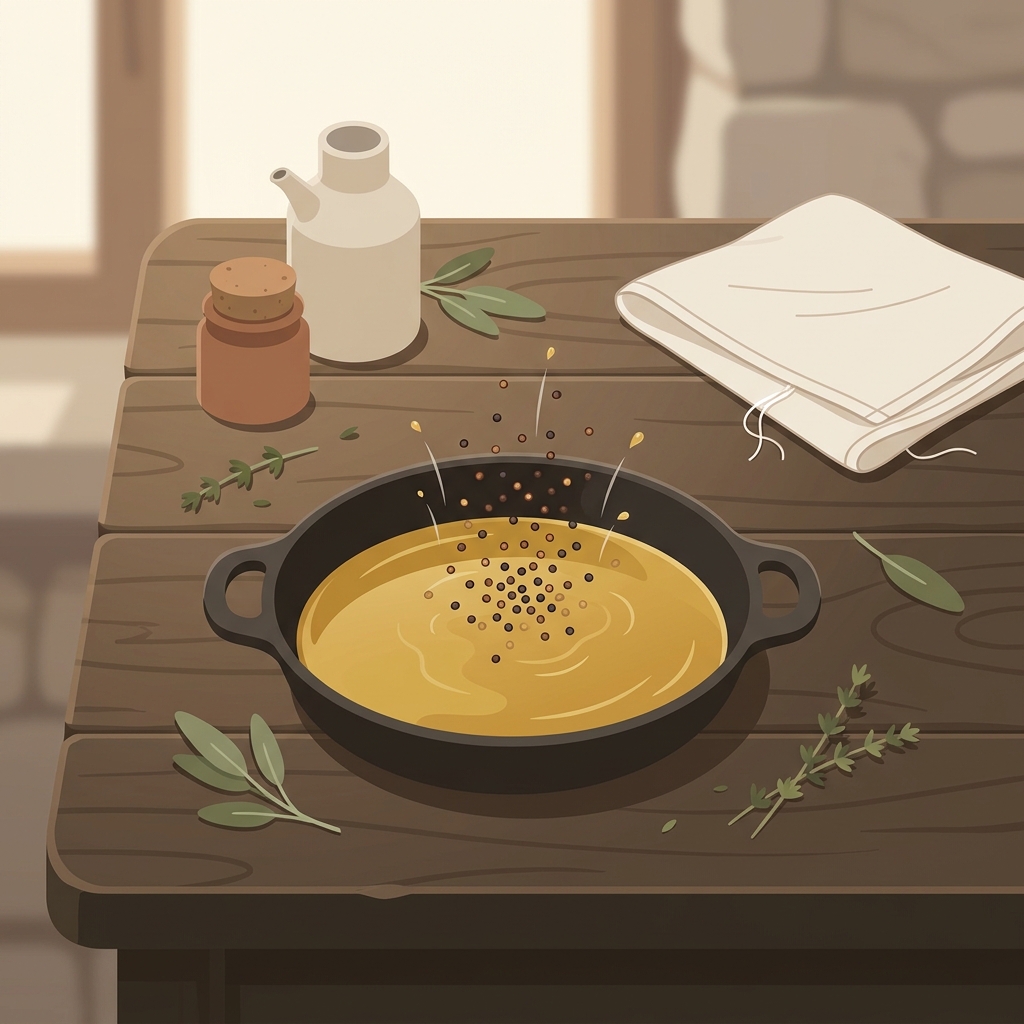
Heat and oil choice: keep it fragrant, not smoky
- Use ghee or a neutral oil so spices lead the flavor; keep oil shimmering, not smoking Tofu World guide.
- Blooming is quick. Many spice blooms happen in well under a minute; for ground spices it often takes under 30 seconds Milk Street: Bloom your spices; Spice Trader guide.
- Small pan, small batch. A modest pan and enough oil to freely surround the spices make timing easier TwoSleevers tadka guide.
Common mistakes and quick fixes
- Oil smoking or rapid darkening: turn off the heat and move the pan off the burner if safe. Let it cool; do not try to quench smoking oil with water or another liquid Tofu World guide.
- Burnt spices: turn off the heat and let the pan cool before safely discarding the mixture and cleaning the pan. Start again rather than carrying the bitter burnt mixture into the dish. Burnt bitterness spreads through the whole dish TwoSleevers tadka guide.
- Wet curry leaves: dry the surface thoroughly to reduce splatter, while keeping hands and face clear because the leaves still contain moisture when they hit hot oil TwoSleevers tadka guide.
Quick checklist: blooming whole spices in oil
FAQ
Do I add whole spices to cold or hot oil? For whole spices, add them to hot, shimmering oil so a test seed sizzles right away. Starting in cooler oil is more useful for delicate ground spices to avoid scorching TwoSleevers tadka guide; Tofu World guide.
How do I limit splatter when mustard seeds pop? Use a small pan and consider a loose lid or splatter screen as they begin popping, then proceed with the next ingredients TwoSleevers tadka guide.
How to tell when a stainless steel pan is ready can help you read heat cues, and if you prefer dry toasting instead of oil, see our separate oven guide for nuts as a technique reference: How to toast nuts in the oven.