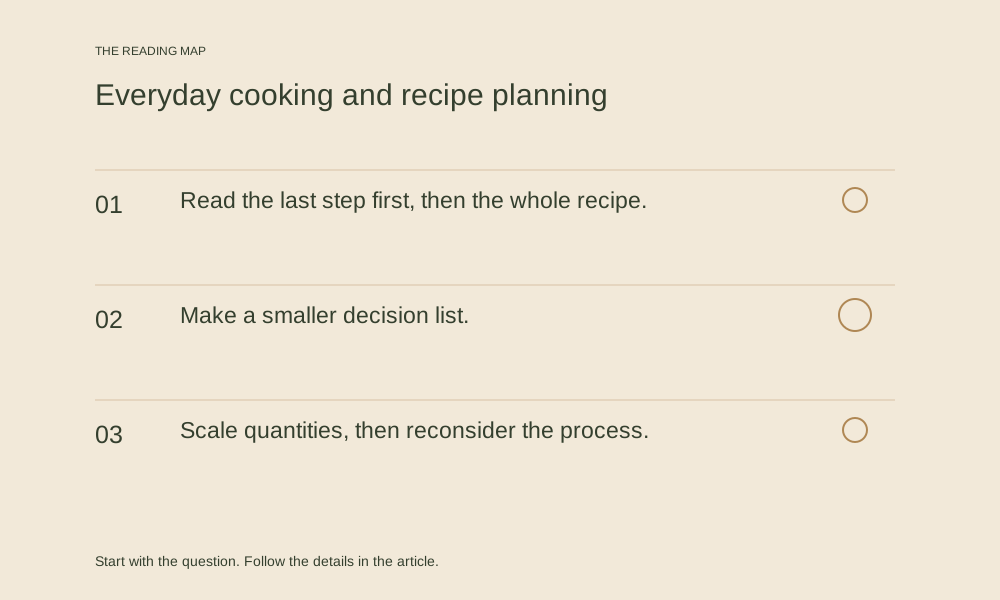

Read the last step first, then the whole recipe.
Before setting out ingredients, find the point at which the meal will be ready to serve. Look for resting, cooling, chilling and preparation that happens earlier in the day. Work backwards to see whether the recipe fits the time you actually have. A short active-preparation time can still sit inside a long overall schedule.
Now read from the beginning. Mark ingredients that are divided between steps, equipment needed in two places, and anything that changes state before use. Butter melted and then cooled is not the same instruction as cold butter cut into pieces. A little attention here can prevent a mid-recipe scramble.
Make a smaller decision list.
Write down the choices that remain yours: pan, portion count, serving time and any intended substitution. Keep the rest of the recipe intact on the first attempt where possible. If an ingredient is unavailable, look for a documented alternative in the original recipe or choose another complete recipe.
A change should have a reason. Reducing the batch to fit your household is a clear goal. Replacing several ingredients because they happen to be in the cupboard is a new development problem. Both can be worthwhile, but they need different expectations.
Scale quantities, then reconsider the process.
Multiplying ingredients is only one part of changing a batch. Pan capacity, working space and the number of cooking batches may change too. The original timing becomes a reference to review, not a number to multiply. We keep that distinction visible in all our kitchen calculators.
For a mixed meal, identify what can wait and what needs serving promptly. Put a few tools aside for the final steps so that finishing a sauce is not interrupted by searching for a clean spoon. Keep safe cooling, holding and storage decisions anchored to official guidance.
Build a useful record of your own.
Save the source and write a short note after the meal. Include what you changed and one thing you would repeat. An ingredient weight, a pan dimension and an observation are easier to act on later than an elaborate rating. Over time, this gives you a small personal repertoire you can trust more than an ever-growing list of untried recipes.
Take this to the kitchen.
At the source
Original references consulted for this research edition. Manufacturer statements describe the named product; they are not our own test results.