A method is a sequence of decisions.
“Cook until done” asks too much of a reader when the pan, heat and intended texture have not been explained. A useful method tells you what to prepare, what to observe and which part of the process that observation describes. The Technique Atlas is organised around those small decisions.
Begin with the result you want: a browned surface, a gently cooked ingredient, a combined mixture or developed dough. Then match the vessel and the movement. Turning up the heat cannot replace every other part of a method; vigorous mixing does not suit every mixture.
Read a cue in context.
A golden edge tells you something about a surface. Bubbles tell you something about movement in a liquid. Neither is a universal measure of what is happening inside the food. A recipe should pair sensory cues with any required measurement and with instructions suited to its ingredients.
For foods requiring a safe internal temperature, use a suitable food thermometer and the relevant official guidance. Our atlas links to the US government temperature reference for the current English research edition. It does not turn a visual illustration into a doneness measurement.
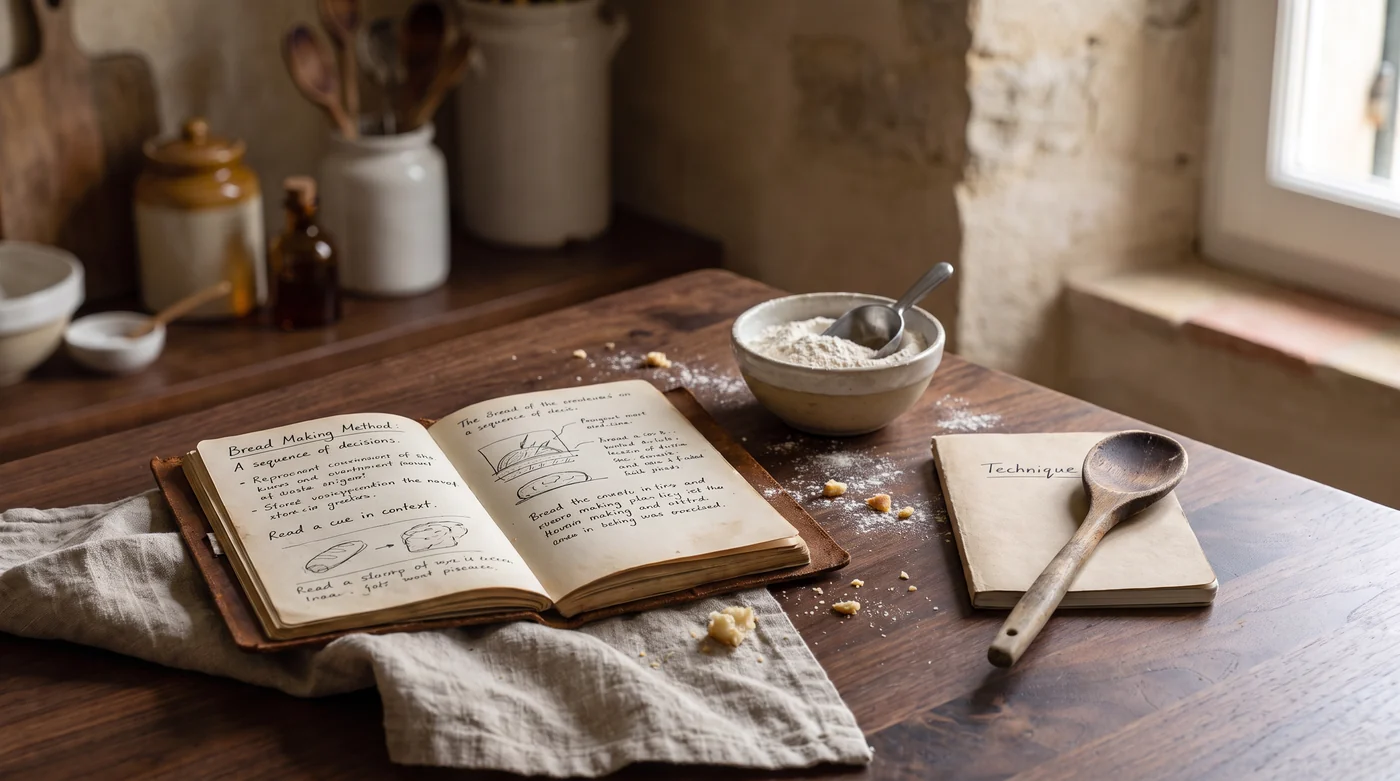
Give each technique its own notebook.
When a method is new, record the pan, ingredient size, batch and heat setting. Add what you noticed rather than just “good” or “bad”: the bottom browned before the centre softened; the mixture kept a streak of flour; the bowl was too small to fold comfortably. These observations suggest a useful next change.
Keep the recipe constant while practising one part of it. If you change the vessel, ingredient quantity and method together, the result becomes difficult to explain. A reliable note is more valuable than a confident guess about which change mattered.
Connect the method to the equipment.
Use the atlas to identify a tool’s job before comparing brands. A broad pan, a snug lid, a flexible spatula and a mixing bowl each support different actions. This is where our cookware and preparation guides meet the actual cooking. The equipment should serve the method, not dictate every meal.
Take this to the kitchen.
At the source
Original references consulted for this research edition. Manufacturer statements describe the named product; they are not our own test results.