
The journal
Chopped vs diced onions: what is the difference?
Chopped and diced describe different levels of shape and size consistency. Learn how recipe wording, cooking time and desired texture determine the cut.

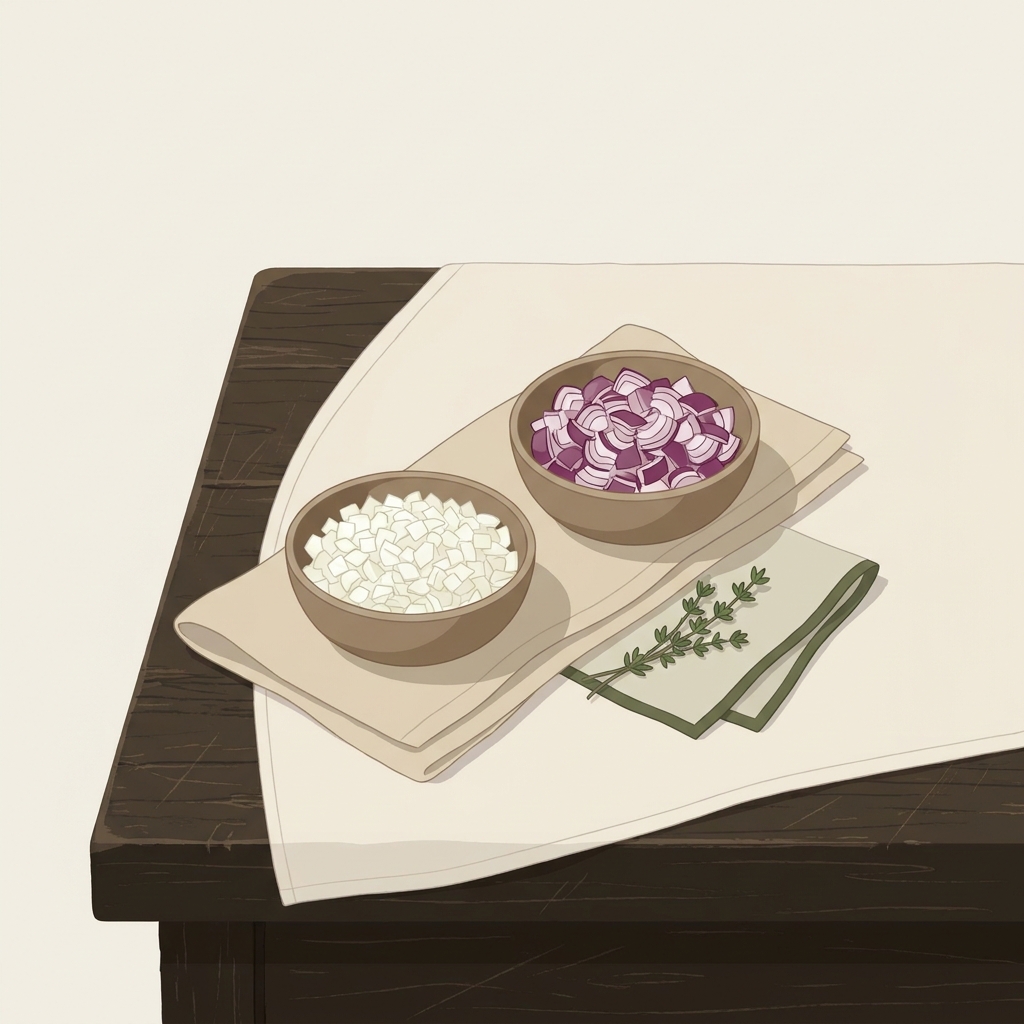
Chopped onion means onion cut into pieces; the word alone does not promise one exact shape or size. Diced onion calls for more consistently sized pieces. Chopped is not automatically larger: a fine chop can be much smaller than a large dice. Read any size or texture instruction in the recipe before you start.
The useful difference is consistency
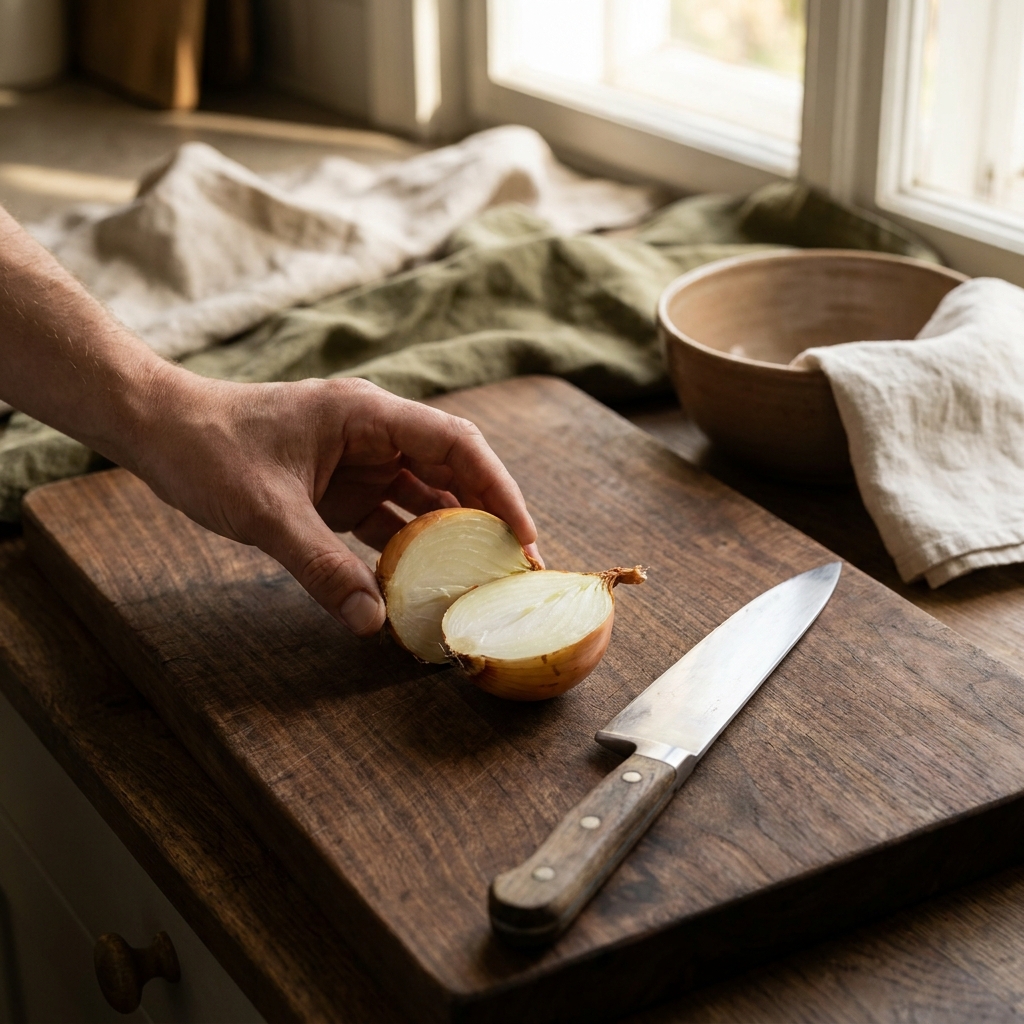
A rough chop permits irregular shapes. A dice asks for more regular spacing between cuts, so the pieces are closer in size. Onion layers still separate, so even a careful dice will not produce solid cubes like a carrot. The Healthy Seasonal Recipes onion tutorial shows how the onion’s structure affects the finished pieces.
Words such as fine, medium, large and roughly modify the task. A recipe may state an actual dimension or show a photograph; that is more useful than assuming every writer uses the same scale. For example, an explicit quarter-inch target is about 6 mm. It should not be silently changed to half an inch because another recipe calls that size medium.
Choose the cut for the dish
- A blended soup: a reasonably even rough chop can be sufficient if the onion will soften and the soup will be blended. Tiny perfect pieces are not automatically useful here.
- A quick salsa: small, fairly consistent pieces help distribute onion through each spoonful. Follow that recipe’s size rather than assuming all salsa needs the same dice.
- A long-cooked braise: larger pieces may suit a visible, substantial texture, but a fine chop can also be intentional if the onion should break down into the sauce.
These are choices of texture, not rules that all soups need rough chopping or all sauces need a fine dice. Cooking time, heat and the desired result still matter. Pieces of similar size are easier to cook to a similar stage; size alone does not prevent burning.
Make the instructions concrete before cutting
Look for a stated size, the intended cooking time and whether the onion should remain visible. If the recipe simply says chopped, aim for a practical, fairly consistent cut for that dish. When cooking for someone else’s recipe or a demonstration, ask about the intended size rather than pretending the word has one universal measurement.
For the cutting sequence, use our step-by-step onion-dicing guide. It covers keeping the flat face on a stable board, controlled cuts and the attached root. The Good Food demonstration also shows a classic method. Keep fingers clear of the blade; do not attempt a horizontal cut toward your supporting hand.
Measure and keep the prepared onion well
Check whether a recipe specifies a whole onion, a prepared weight or a cup measure. Different cuts can pack differently, so do not assume a cup of coarse pieces and a tightly packed cup of fine onion have identical weights. Use the recipe’s stated measure after the preparation step it describes.
Refrigerate cut onion promptly in a suitable covered container. The National Onion Association’s preparation guidance covers handling and refrigerated storage. A storage estimate is not a reason to leave prepared onion on the worktop or keep visibly spoiled food.
Choose the onion cut before you start

Optional equipment for this guide
If transferring chopped ingredients is awkward, a bench scraper can help keep the knife for cutting.
As an Amazon Associate I earn from qualifying purchases. These are researched options, not hands-on test results. Check the exact size or model, current price and availability on Amazon.
| Product option | Fit and limits to check | Retailer |
|---|---|---|
| Product imageOXO Good Grips bench scraper | Use the bench scraper to move chopped onion from the board rather than dragging a knife edge sideways. It does not replace a sharp suitable knife or a stable chopping board. | View on Amazon |