
The journal
Is 1 cup dry the same as 1 cup wet?
A clear answer about dry vs liquid measuring cups, with practical steps for accurate measuring at home.
Yes in volume, but use the right tool. Within the same measuring system, one cup denotes the same volume whether you’re measuring dry or liquid ingredients, yet dry measuring cups and liquid measuring cups are shaped for different jobs and aren’t reliably interchangeable when accuracy matters. Match the marked volume and cup convention first; the tool’s design then affects how easily you can measure and transfer ingredients (America’s Test Kitchen; Pro-Measures).
Why the tools differ
Dry measuring cups are meant to be filled to the top and leveled off with a straight edge for an exact measure. Liquid measuring cups are transparent, have a spout and handle, and are marked so you can pour to a line without spilling or needing to level across the top (Pro-Measures). The volume unit is the same across both tools, but equal volumes don’t weigh the same: a cup of different ingredients can have very different masses because density varies (Pro-Measures).
Stick to the cup definition your recipe uses: US and metric cup conventions can differ. Check its stated milliliters or the recipe source’s measurement guide rather than assuming every cup-shaped tool has the same capacity (Pro-Measures).
How to measure with each cup
Dry ingredients (flour, sugar, cocoa)
- Fill the dry measuring cup slightly over the rim, then level it flush with a straight edge. This is what the flat rim is designed for (Pro-Measures).
- Avoid packing unless a recipe specifically says “packed.” Packing changes the mass at a given volume (Pro-Measures).
For a step-by-step on flour specifically, see our guide on how to measure flour correctly.
Liquids (water, milk, oil)
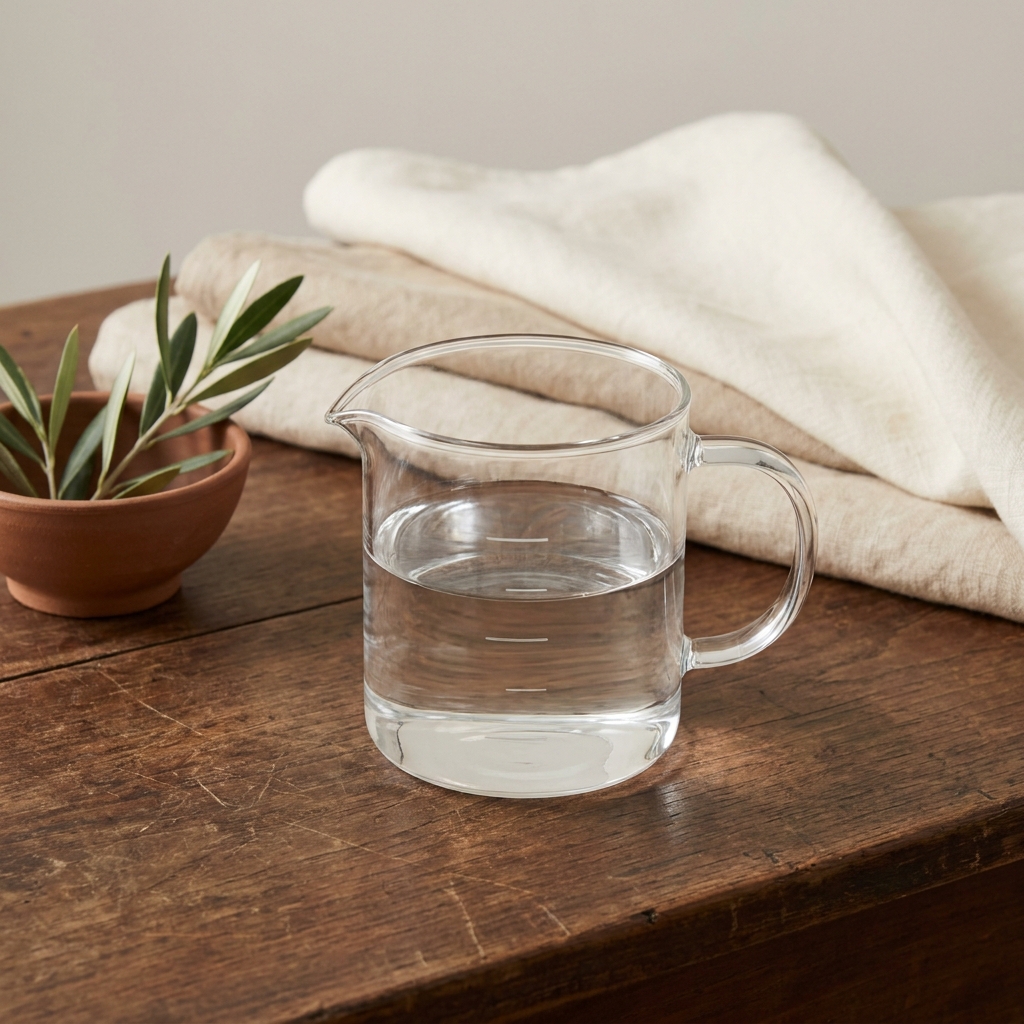
- Place the liquid measuring cup on a flat surface, pour to the mark, and read the measurement at eye level to avoid reading error (DVO newsletter).
- Use the spout to pour without losing volume to spills (Pro-Measures).
Thick or sticky ingredients (yogurt, sour cream, peanut butter, honey)
An adjustable plunger-style measuring cup makes these easier to measure accurately and to scrape out completely. If you don’t have one, a dry measuring cup is typically more consistent than a liquid one for semisolids (America’s Test Kitchen).
When to weigh instead of using cups
If a recipe’s texture or rise really matters, weigh ingredients. Weighing bypasses variation from scooping, sifting, or packing, and it’s the most consistent way to match the recipe developer’s intent (Pro-Measures).
- Use a digital kitchen scale with a tare function so you can zero out your empty bowl and measure only the ingredient weight (DVO newsletter).
Related: keep staples in good condition so they measure and bake predictably. Here’s how long flour stays fresh in an airtight container.
Quick measuring checklist for cups and a scale
Common mistakes and easy fixes
- Measuring flour in a liquid cup. You can’t level across the top, so accuracy suffers. Use a dry cup and level, or weigh (Pro-Measures).
- Using a dry cup for liquids. Filling to the brim invites spills and overfilling. Use a liquid cup and pour to the line (Pro-Measures).
- Reading liquid marks while holding the cup in the air. Set it on the counter and check at eye level to avoid misreads (DVO newsletter).
FAQ
Can I measure flour in a liquid cup in a pinch?
It’s not ideal. Liquid cups aren’t made to level dry ingredients, so your volume is more likely to be off. Use a dry cup and level, or weigh (Pro-Measures).
Does one cup weigh the same for every ingredient?
No. A cup measures volume, not mass. Different ingredients have different densities, so their weights per cup vary (Pro-Measures).
What should I use for sour cream, peanut butter, or honey?
An adjustable plunger-style measuring cup is most consistent; otherwise, a dry cup is typically more accurate than a liquid cup for semisolids (America’s Test Kitchen).