
The journal
What temperature should I blind bake my crust? A practical guide
how to blind bake pastry at 375°F / 190°C, with par-bake and full blind-bake timing and practical steps for consistent results.
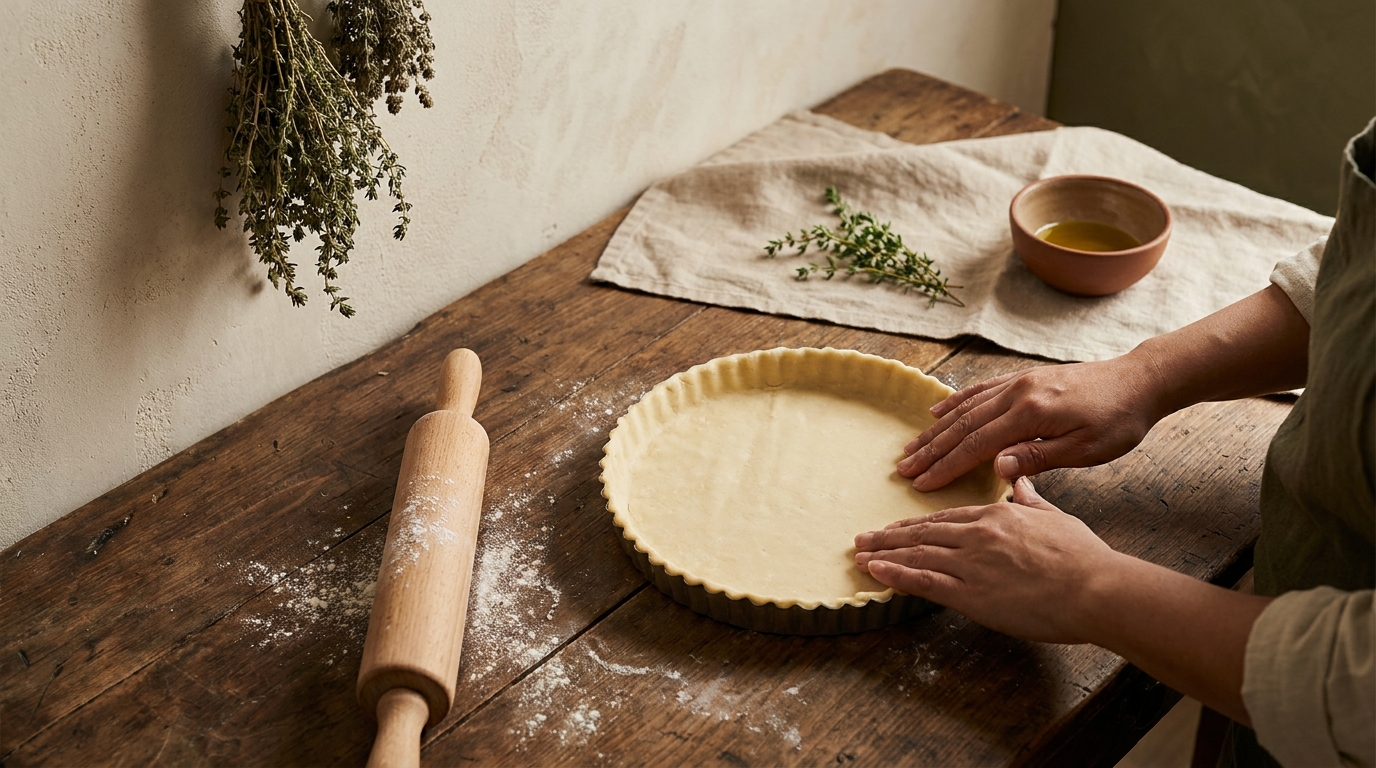
Quick answer: best temperature to blind bake your crust
Set your oven to 375°F / 190°C as the default for standard shortcrust and tart shells, using weights for the first stage to hold the shape and then finishing uncovered until the base is dry and the color matches your target. This temperature is the common middle ground that sets the dough without browning the base too fast, and it supports both a par-bake for custard-style fillings and a full blind-bake for no-bake fillings King Arthur Baking guide
Short summary for shortcrust and tart shells, how to blind bake pastry
For a par-bake that will finish under a custard or pumpkin filling, bake with weights at 375°F / 190°C for about 15 to 20 minutes, remove weights and continue 5 to 8 minutes until the shell is pale and set. For a fully blind-baked shell used for no-bake fillings, continue until the crust is crisp and lightly golden, typically 30 to 40 minutes total at the same temperature
These two outcome targets let you choose a schedule that matches the filling you plan to use, so you can avoid overworking the dough or underbaking the base. For additional timing variations, see Food52.
Why oven temperature matters for blind baking
Temperature controls three key things when blind baking: how quickly fat softens, how the gluten network sets, and how steam forms and leaves the dough. At moderate to hot heat, the fat in a shortcrust melts enough to create flaking and tenderness while the protein structure firms, which prevents a soggy or doughy base; the 375°F / 190°C setting gives both reliable setting and a lower risk of the base burning before moisture is driven off Serious Eats blind bake guide

Oven calibration changes everything. A domestic oven that runs 25°F high will brown a base faster, while a cooler oven extends times. Use an oven thermometer to check actual temperature, and if your oven is consistently hot, reduce the set point by 10 to 20°F and lengthen the time slightly to reach the same interior doneness. Pan material matters too: metal pans conduct heat faster than glass, and dark pans speed browning. Expect a glass or ceramic dish to need a little more time at the same temperature.
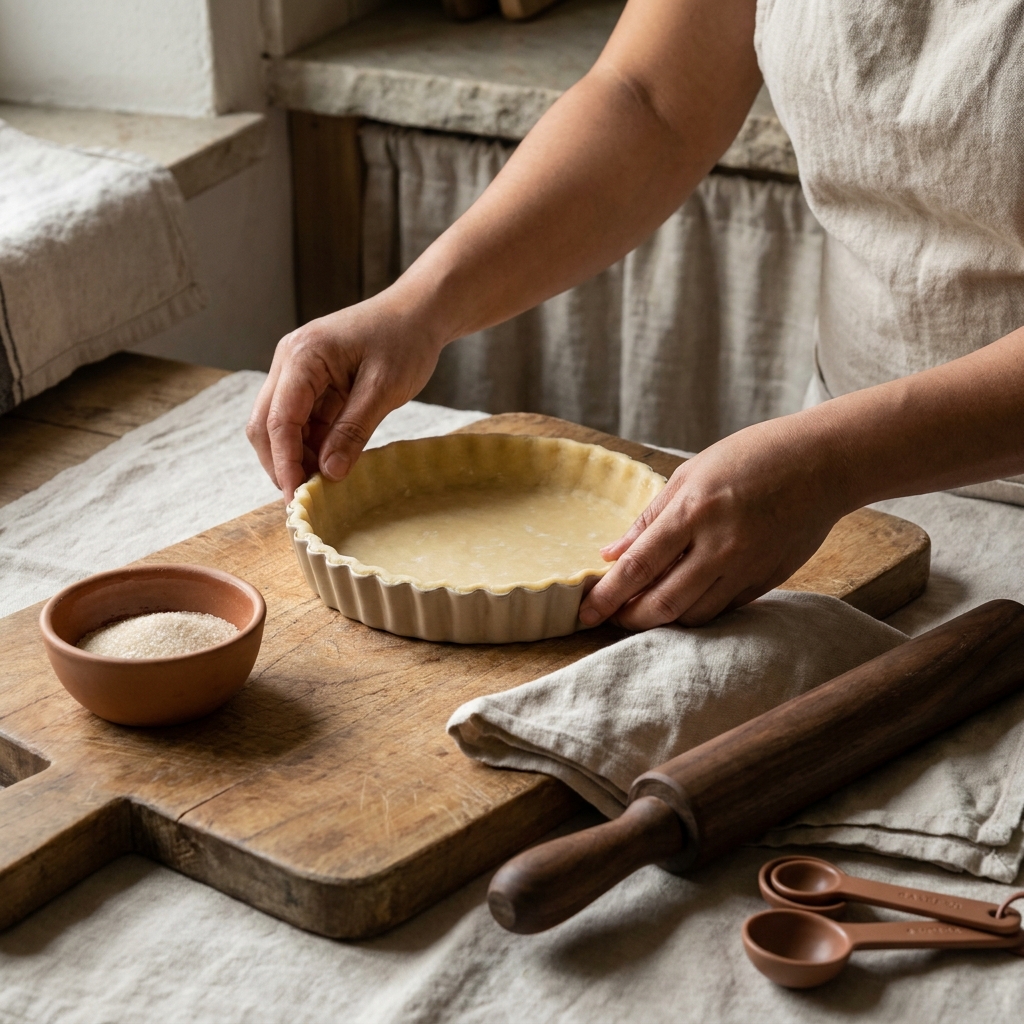
As a rule of thumb, treat 375°F / 190°C as the reliable midpoint for shortcrust and non-laminated tart shells, and reserve the higher 400 to 425°F / 200 to 220°C range for puffed or laminated bases where lift is a priority.
Core step-by-step method for blind baking shortcrust and tart shells
Prepare and chill the shell
Roll your shortcrust to an even thickness, ease it into the pan without stretching, trim the rim and chill the lined pan for at least 20 to 30 minutes, or briefly freeze for 10 minutes. Chilling firms the fat and helps the pastry hold its shape when it first heats in the oven, which reduces shrinkage and slumping during blind baking Serious Eats blind bake guide
Practical note: if your recipe calls for crimping or a decorative edge, do that before chilling so the shaped border holds its form when baked.
Line with weights and initial bake
Line the chilled shell with parchment or foil, pressing snugly into the edges, then fill to the rim with pie weights, dried beans or granulated sugar to hold the sides in place. Baking with weights at 375°F / 190°C for roughly 15 to 20 minutes typically firms the shape and sets the base enough to remove the weights without collapse King Arthur Baking guide
Using granulated sugar as a conforming weight is a practical option because it settles evenly across the base and can be cooled and reused, unlike some beans that absorb moisture. Fill the weights to the rim so the sides have support during the first bake.
What temperature should I blind bake my crust at?
For standard shortcrust and tart shells, start at 375°F / 190°C; use weights for the first stage then finish uncovered to reach either a pale, set par-bake or a fully dry and golden blind-bake depending on your filling.
Finish without weights
After the initial weighted bake remove the foil and weights carefully and return the shell to the oven. For a par-bake, continue for about 5 to 8 minutes at 375°F / 190°C until the surface looks set and still pale; for a full blind-bake, continue until the base is dry and lightly golden, which usually brings the total time closer to 30 to 40 minutes at the same temperature
If you are using a laminated or puff pastry case and started at a higher initial temperature, watch for quick lift and then reduce heat if the exterior reaches the color you want before internal dryness is achieved
Par-bake versus fully blind-baked: timing, tests and when to choose each
Choose a par-bake when the filling will finish in the oven or where the filling needs to set with residual heat, for example custards and many pumpkin or sweet potato pies. A par-bake schedule is typically 15 to 20 minutes with weights followed by 5 to 8 minutes without weights, leaving the shell pale and set but not fully crisp King Arthur Baking guide
Opt for a full blind-bake when the filling is added cold or does not require oven finishing, such as certain no-bake creams or chilled lemon curds. For that outcome, a single temperature of 375°F / 190°C and a total time near 30 to 40 minutes, removing weights partway through, usually gives a dry, firm and lightly golden shell that won’t soften from the filling Serious Eats blind bake guide
Rather than rely only on clock time, use visual and tactile cues: a par-baked shell is set and pale, with the base feeling firm to a gentle press; a fully blind-baked crust is dry, crisp and shows light golden color across the base and edges. If you need a very crisp result for a sugary or wet filling, continue baking without weights until the shell feels thin and brittle under a gentle tap.
Adjust these times for dough thickness and pan type. A thicker crust will need more time to dry; a dark or thin-metal pan will speed browning and can shorten the time needed at 375°F / 190°C by several minutes. If your oven runs hot, cut the set point or shorten times; if cool, give extra minutes but watch color rather than the clock alone
Troubleshooting, common mistakes and practical examples
Shrinkage is one of the most common problems. To reduce it, avoid stretching the dough into the pan, chill the lined case thoroughly and use weights that reach the rim to keep the sides supported during the first bake. Freezing a well-lined shell for a short time before baking can further reduce slump Serious Eats blind bake guide
Bubbling in the base is usually handled with docking and weights. If you choose not to use weights, poke the base evenly with a fork before chilling and baking to allow steam to escape. Docking helps limit large bubbles but will not prevent side-wall slump as effectively as weights.
If a side wall collapses after removing weights, you can press the dough back into place and patch small gaps with a scrap of dough, then return the pan to the oven briefly so the repair sets. For larger failures, re-roll a fresh piece and re-line the pan; chilling well before the next attempt reduces the risk of repeat collapse.
Three quick example schedules you can copy onto a recipe card:
- Custard tart, par-bake: Chill lined shell 30 minutes, line with foil and weights, bake at 375°F / 190°C for 15 to 20 minutes, remove weights and bake 5 to 8 minutes until pale and set, fill and finish in oven as recipe directs King Arthur Baking guide
- Lemon tart with no-bake filling, full blind-bake: Chill lined shell, weight and bake at 375°F / 190°C for 15 to 20 minutes, remove weights and continue 15 to 20 minutes until base is dry and lightly golden, cool completely before adding filling
- Puff-based tart case: Preheat to 425°F / 220°C, bake initially 8 to 12 minutes to get a burst of lift, then lower to 375°F / 190°C and continue until interior layers are set and exterior is golden
Quick checklist for using sugar or weights to blind bake shells
Final quick checks: use an oven thermometer to confirm actual temperature, watch color rather than time alone, and always cool a fully blind-baked shell before adding cold filling to avoid steam re-softening the base.
Troubleshooting wrap up and short tips
Use weights when precision is important; use docking only if weights are not available. Fill weights to the rim, chill the case and watch the base color in the last minutes of the bake for the exact target your recipe needs
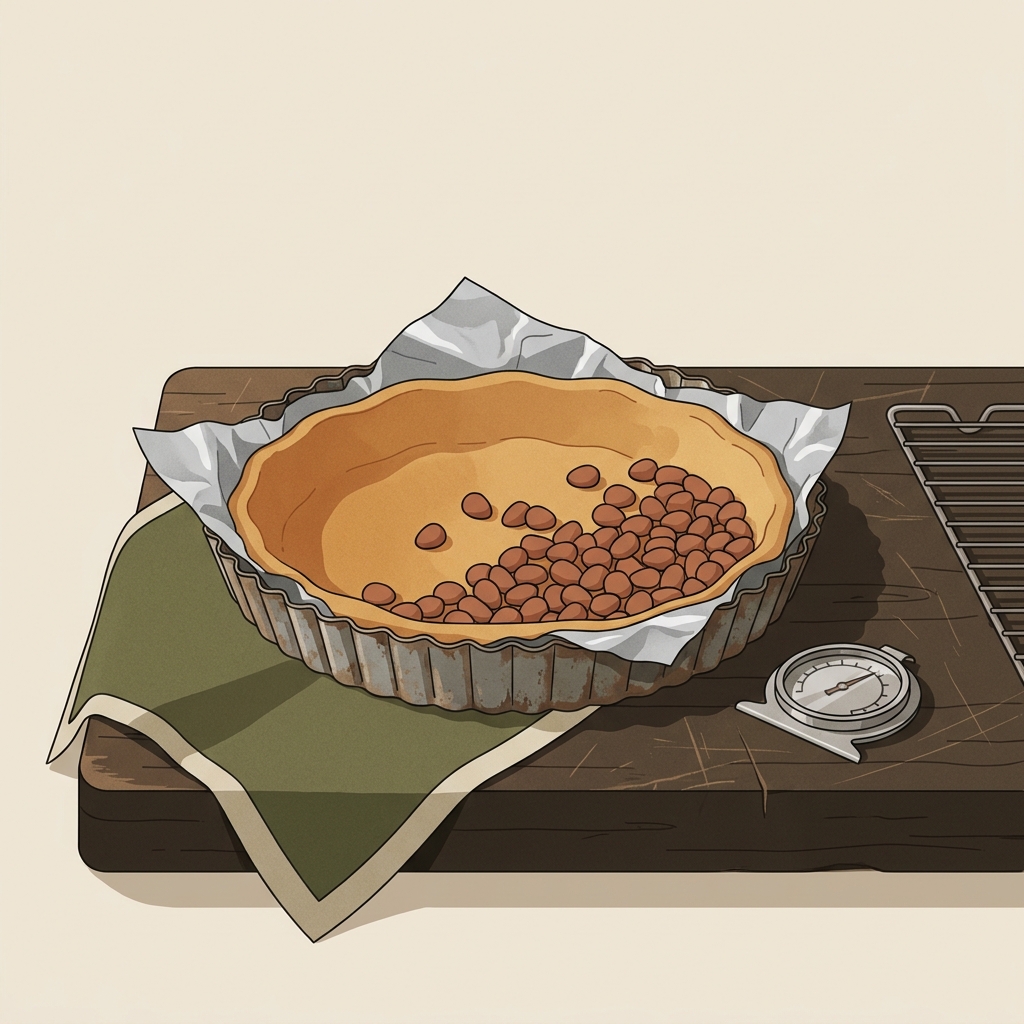
When in doubt, prefer a slightly longer dry time for a no-bake filling and a slightly shorter one for a filling that will finish in the oven. Keep your notes about oven quirks and pan behavior for next time; a small adjustment in temperature or minutes will often fix recurring problems.
Frequently asked questions
What is the default temperature to blind bake a shortcrust?
For most shortcrust and tart shells set the oven to 375°F / 190°C and use weights for the initial bake, adjusting time by pan material and oven calibration.
How long should I par-bake a crust for a custard filling?
Par-bake with weights for about 15 to 20 minutes at 375°F / 190°C, then remove weights and bake an additional 5 to 8 minutes until the shell is pale and set.
Do I need to blind bake puff pastry cases?
Puff or laminated cases usually need a higher initial heat, about 400 to 425°F / 200 to 220°C, to promote lift before reducing heat to finish.
Follow the step-by-step checklist and the quick schedules to get consistent results. Note your oven behavior and pan choices so you can fine-tune times on future bakes.
Product options for this topic
As an Amazon Associate I earn from qualifying purchases. These are researched options, not hands-on test results. Check the exact size or model, current price and availability on Amazon.
| Product option | Fit and limits to check | Retailer |
|---|---|---|
| Nordic Ware Naturals half sheet, single pan | An aluminum sheet-pan option for baking and roasting. Measure your oven and recipe’s required pan dimensions; shallow rims are not a deep cake tin. | View on Amazon |