
The journal
Can I substitute dried herbs for fresh herbs? The simple 1-to-3 rule
Yes: for flaked dried herbs, start with 1 teaspoon dried for 1 tablespoon chopped fresh. Learn when to add them, the exceptions, and a quick checklist to get it right.
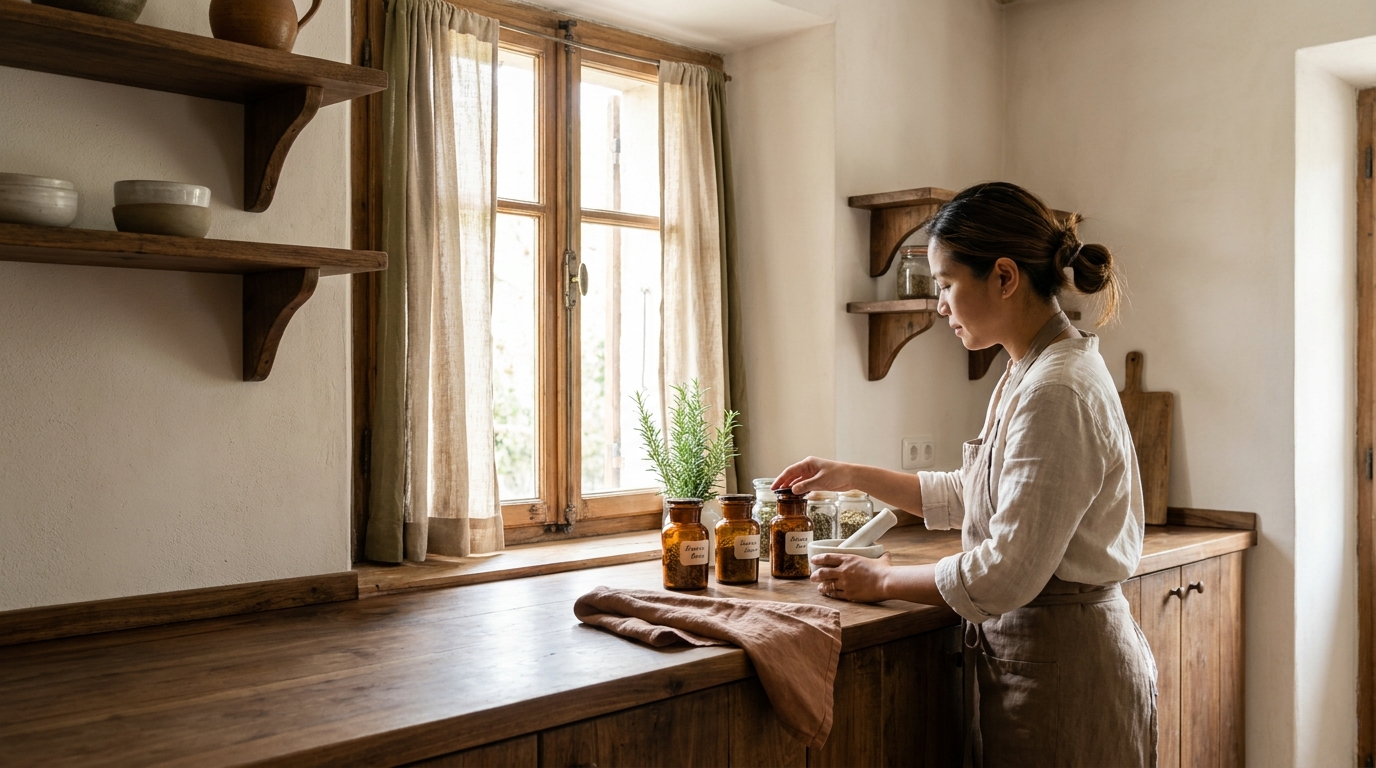
The standard kitchen conversion
Use the 1-to-3 rule for flaked herbs: 1 tablespoon chopped fresh equals about 1 teaspoon dried. The reverse also applies if you’re going from dried to fresh. Measure fresh herbs after chopping so the volume reflects how they’ll flavor your dish. Start a little low if unsure, then taste and adjust. Mountain Rose Herbs blog; ScottsMiracle-Gro guidance
What about powdered or finely ground herbs?
Powdered or finely ground dried herbs are more concentrated than flaked leaves. Use less than the 1-to-3 conversion and add gradually while tasting. Older dried herbs can lose potency, so adjust based on aroma and flavor. MWLC substitution guide
Quick potency check: pinch and smell your dried herbs. If the aroma is faint, they won’t add much to your dish. ScottsMiracle-Gro guidance
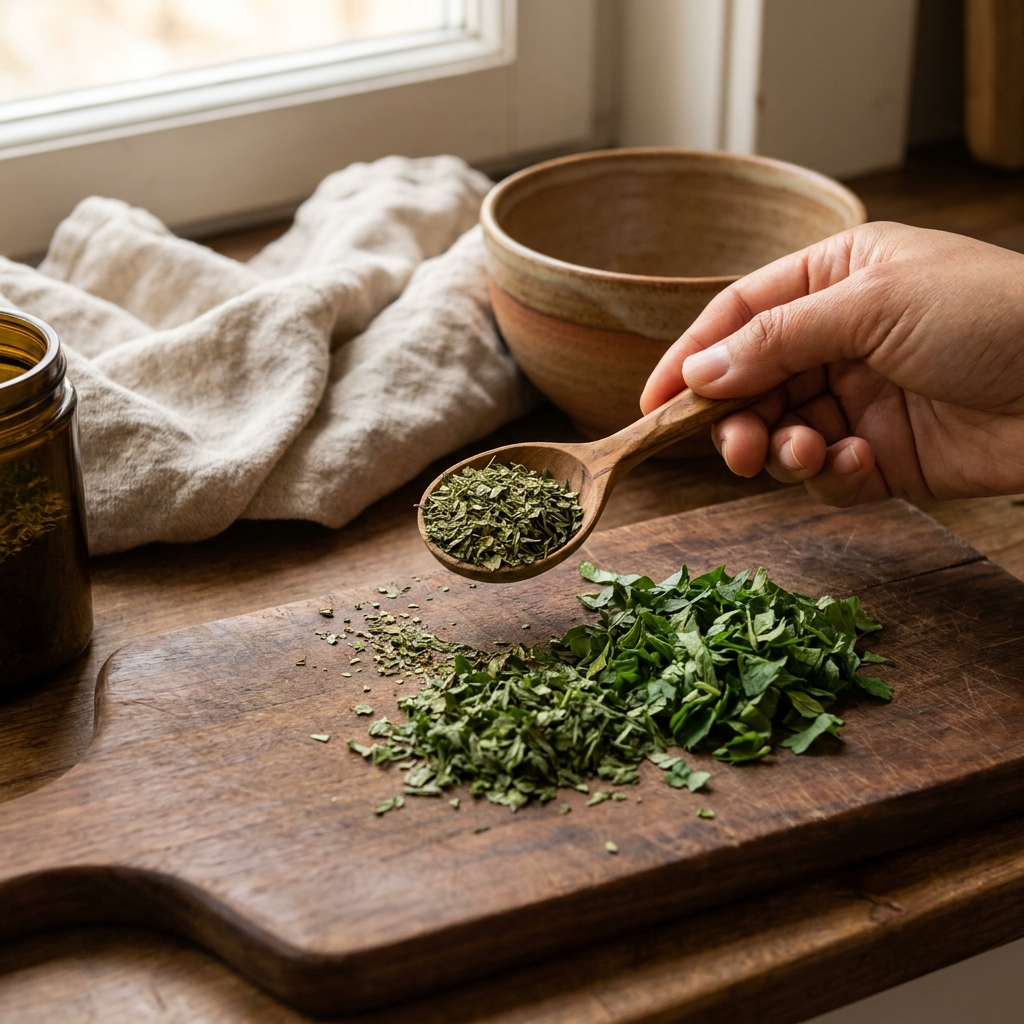
When to add dried vs fresh
Add dried herbs earlier in cooking so heat and moisture can rehydrate them and release flavor. Add tender fresh herbs near the end or off heat to keep their bright aroma and color. For raw dishes like salads and many dressings, fresh herbs usually perform better than dried. ScottsMiracle-Gro guidance; MWLC substitution guide
Herbs that swap cleanly vs. ones to treat carefully
- Often reliable dried-to-fresh swaps: thyme, oregano, rosemary. These hold flavor well when dried and stand up to long cooking. ScottsMiracle-Gro guidance
- Use care or prefer fresh: parsley and cilantro lose much of their flavor when dried; dill tends to taste dull when dried; basil loses some flavor when dried, so many cooks add fresh at the end even if using some dried earlier. ScottsMiracle-Gro guidance
Practical substitution examples
- Tomato sauce: If a recipe calls for 3 tablespoons fresh basil, start with about 3 teaspoons dried basil during the simmer, then finish with a handful of fresh basil if available for brightness. Mountain Rose Herbs blog
- Roast chicken rub: Swap 2 tablespoons chopped fresh rosemary for about 2 teaspoons dried rosemary needles in the rub; apply before roasting so heat extracts flavor. ScottsMiracle-Gro guidance
- Vinaigrette: Prefer fresh herbs for raw dressings; if using dried, start at one-third the fresh amount and let the dressing sit a few minutes to bloom the herbs. MWLC substitution guide
Quick steps when swapping dried for fresh herbs
Storing fresh bunches right helps them last until you cook: see our guide on which herbs should not be refrigerated.
FAQ
Can I use dried herbs in salads?
It usually won’t match the fresh flavor or texture. If you must, use about one third of the fresh amount and let the dressing sit a few minutes so the herbs hydrate, but fresh is generally better here. MWLC substitution guide
What’s the reverse conversion from dried to fresh?
Multiply by three: 1 teaspoon dried ≈ 1 tablespoon chopped fresh (for flaked forms). Mountain Rose Herbs blog; ScottsMiracle-Gro guidance
How can I coax more flavor from dried herbs?
Rub them between your fingers to release trapped aromatic oils, and add them early so heat can hydrate them. If the aroma is faint even after rubbing, replace the jar. Chef Neil Fusco’s advice; ScottsMiracle-Gro guidance

A useful next step
If you want fresh herbs within reach, Garden in Reach explains how to choose a suitable container for culinary herbs. Do herbs like deep or shallow pots? A practical guide.